How to Fix Multiple Damaged Disks in a NAS Idis DR-8416 RAID Array

Has your NAS Idis DR-8416 suddenly lost its network drive and you’re unsure what to do next? Did the RAID array collapse, making your files inaccessible? Is the device throwing errors during startup? Perhaps you accidentally rebuilt the RAID array or several hard drives failed at the same time?

How to Fix Multiple Damaged Disks in a NAS Idis DR-8416 RAID Array

Idis DR-8416 NAS Data Recovery in 2025

In this step-by-step tutorial, we’ll show you how to rebuild your RAID and recover data from an DR-8416. We’ll walk through the most common causes of failure and demonstrate proven methods to restore files from a lost or degraded RAID array.

How to Fix Multiple Damaged Disks in a NAS Idis DR-8416 RAID Array

RAID Recovery™ 2.8
Recover data from damaged RAID arrays inaccessible from a computer.
Download

Why Regular Data Recovery Tools Can’t Restore Files from RAID

Conventional hard drives store user data by writing it sequentially across the disk surface, which means an entire file is typically located on a single drive. In contrast, when data is written to a RAID array, each file is split into multiple fragments. These fragments are then distributed and written in sequence across all the drives in the array. Depending on the configuration, fragment sizes can range from 2 KB to 2 MB, so every file is physically stored across several disks at once.

This approach significantly increases read and write performance — after all, writing two halves of a 1 GB file to two drives simultaneously is much faster than writing the full 1 GB to a single disk. However, this same mechanism makes file recovery far more complex.

Different RAID levels use different methods to distribute and protect data. On top of that, manufacturers like Idis often add their own proprietary structures and variations. As a result, data can be written to disks in many different formats, and each requires a specific approach during recovery.

Can the use of snapshot or versioning features on NAS Idis DR-8416 devices aid in data recovery after data loss?

Yes, the use of snapshot or versioning features on NAS Idis DR-8416 devices can aid in data recovery after data loss.

Snapshots allow you to take point-in-time copies of your data, creating a backup that can be used to restore files or folders to a previous state. If you accidentally delete or modify a file, you can revert back to a snapshot taken before the deletion or modification occurred.

Versioning features, on the other hand, keep multiple versions of files over time. This means that if you make changes to a file and later realize that you need to revert back to a previous version, you can easily access and restore the desired version.

Both snapshot and versioning features provide a safety net for recovering data in case of accidental deletion, file corruption, or other data loss scenarios. By utilizing these features on NAS Idis DR-8416 devices, you can greatly enhance your ability to recover lost data.

How to Remove Hard Disks from Your NAS and Connect Them to a PC

Although the NAS DR-8416 can be accessed over the network, you still need to remove its hard disks and connect them directly to a Windows PC. Only then can the recovery software properly scan and analyze the drives. Follow these steps:

  1. Power off the NAS and disconnect it from the power source.

    WARNING! Before removing any drives, carefully read the device manual. Improper actions may damage both the NAS enclosure and the hard disks in the RAID array.

  2. Remove the hard disks one by one, gently sliding each drive out of its slot. Remember that hard disks are highly sensitive: any impact or drop can cause serious physical damage.

  3. Label each hard disk according to its position inside the NAS. The order of the drives is crucial for correct RAID reconstruction.

  4. Connect the drives to your computer. In this video, we explain which ports you can use to connect hard disks and what to do if your PC does not have enough free connectors.

    Go to view

    How to Order Remote Data Recovery

    How to Order Remote Data Recovery

Step-by-Step Data Recovery with Hetman RAID Recovery

Hetman Raid Recovery

This program restores data from damaged RAID arrays and is fully compatible with Idis DR-8416. Each hard disk in the array contains technical metadata describing how files were written. When launched, Hetman RAID Recovery analyzes this metadata, automatically reconstructs the damaged array, and provides access to its contents. After that, you can browse the recovered disk and save your files. The program can also restore files that were accidentally deleted from the network drive.

Go to view
How to recover data from a Idis

How to recover data from a Idis

DR-8416 has 8 HDD slots, and it supports the following array types:

  • RAID 0;
  • RAID 1;
  • RAID 5;
  • RAID 6;
  • RAID 50;
  • RAID 60;
  • JBOD;

NAS supports:

  • exFAT, VFAT, FAT 12 / 16 / 32;
  • NTFS / ReFS;
  • APFS / HFS+;
  • Ext2 / 3 / 4 / ReiserFS / XFS / UFS / ZFS / Btrfs;
  • VMFS / HikvisionFS;

How to Safely Recover Data from Disk Images

This utility allows you to create a complete copy of a disk and work with the disk image instead of the physical drive. This approach helps protect your data from:

  • Overwriting during the recovery process;
  • Additional data loss caused by bad sectors;
  • User errors.

To create a disk image, follow these steps:

  1. Ensure you have enough free space to store the image. Its size will typically match the size of the original disk.

  2. In the main window, select the target disk and choose Tools - Save Disk. You can also select multiple disks if needed.

  3. When the Image Creation Wizard opens, select whether you want to save the entire disk or only a specific region. Adjust the settings and click Next.
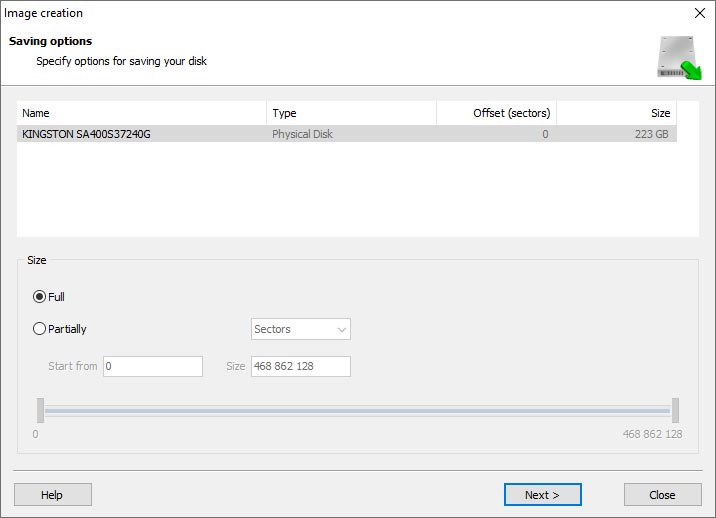
    Hetman RAID Recovery: Image Creation Wizard
  4. Choose the directory where the image will be saved. You may select any available disk connected to your PC or upload the image via FTP.
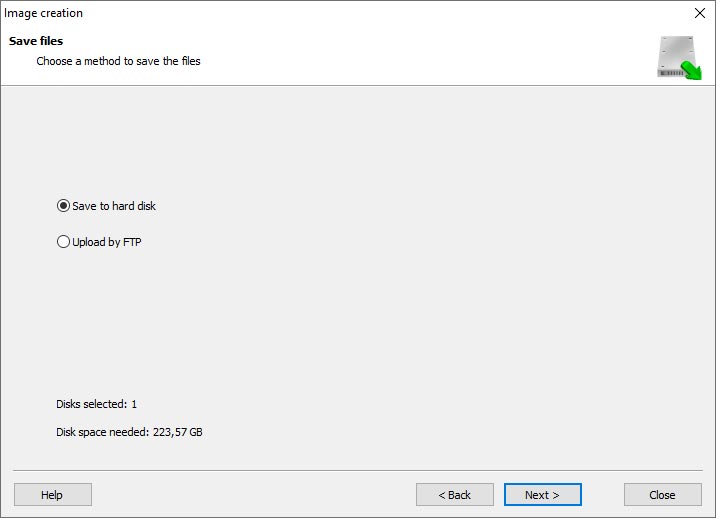
    Hetman RAID Recovery: Choose a disk or save the image via FTP

Where Are the User’s Files Actually Stored?

The Idis DR-8416 network-attached storage keeps OS Linux operating system files on a separate RAID 1 (mirrored) array. Usually, all NAS systems create several volumes on every hard disk, and the first of them takes up to 2 Gb of space. This is where operating system files are stored. Other volumes are united into a RAID array where user’s data is written.

RAID Recovery Software: Detailed Comparison

Product Operating system RAID controller support Supported file systems Virtual RAID controller support Data recovery from damaged RAID File preview
Hetman RAID Recovery Windows, Linux, MacOS Yes, over 100 controllers FAT, exFAT, NTFS, ReFS, APFS, HFS+, Ext4, Ext3, Ext2, ReiserFS, Btrfs, VMFS, Hikvision, XFS, UFS, ZFS Yes Yes Yes
DiskInternals RAID Recovery Windows Yes, over 10 controllers FAT, NTFS, Ext2/3/4, HFS+ No Yes Yes
R-Studio Windows, Mac, Linux Yes, over 20 controllers FAT, NTFS, Ext2/3/4, HFS+ Yes Yes Yes
UFS Explorer RAID Recovery Windows, Mac, Linux Yes, over 100 controllers FAT, NTFS, Ext2/3/4, HFS+ Yes Yes Yes
EaseUS Data Recovery Windows Yes, over 20 controllers FAT, NTFS, Ext2/3/4, HFS+ No Yes Yes
ReclaiMe Free RAID Recovery Windows Yes, over 100 controllers FAT, NTFS, Ext2/3/4, HFS+ Yes Yes Yes

Feedback

We will be happy to answer your questions!

Comments (3)

  • Hetman Software: Data Recovery
    Hetman Software: Data Recovery 9.08.2022 12:31 #
    If you want to ask a question about data recovery, from NAS DR-8416, feel free to leave a comment!
  • Kurt Gingell
    Kurt Gingell 27.08.2023 14:54 #
    Can data recovery from a NAS Idis DR-8416 device be done if the device is showing signs of hardware failure?
    • Hetman Software
      Hetman Software 27.08.2023 16:00 #

      Data recovery from a NAS device like the Idis DR-8416 can be challenging if the device is showing signs of hardware failure. However, it is not impossible. Here are a few steps you can take to attempt data recovery:

      1. Check for basic troubleshooting: Before assuming hardware failure, ensure that the problem is not due to a simple issue like a loose cable, power supply problem, or network connectivity issue. Sometimes, these issues can cause the device to appear non-functional.
      2. Contact the manufacturer: Reach out to the manufacturer's support team for assistance. They may be able to guide you through troubleshooting steps specific to your device or suggest potential solutions.
      3. Consult a professional data recovery service: If the manufacturer's support or your troubleshooting efforts do not resolve the issue, consider consulting a professional data recovery service. These services specialize in recovering data from failed storage devices and may have the necessary expertise and tools to recover data from a faulty NAS device.
      4. Replace faulty hardware components: In some cases, the hardware failure may be isolated to specific components like hard drives or power supplies. If you have the technical expertise, you can try replacing these components with new ones to see if it resolves the issue. However, note that this should be done cautiously, as improper handling or mismatched components can cause further damage.

      It is important to note that data recovery from a NAS device with hardware failure is not guaranteed, and the success of the recovery depends on the extent of the damage. It is always recommended to have regular backups of your data to mitigate the risk of data loss.

Post comment
User
Leave a reply
Your email address will not be published. Required fields are marked *

Vladimir Artiukh

Author: Vladimir Artiukh, Technical Writer

Vladimir Artiukh is a technical writer for Hetman Software, as well as the voice and face of their English-speaking YouTube channel, Hetman Software: Data Recovery for Windows. He handles tutorials, how-tos, and detailed reviews on how the company’s tools work with all kinds of data storage devices.

Oleg Afonin

Editor: Oleg Afonin, Technical Writer

Oleg Afonin is an expert in mobile forensics, data recovery and computer systems. He often attends large data security conferences, and writes several blogs for such resources as xaker.ru, Elcomsoft and Habr. In addition to his online activities, Oleg’s articles are also published in professional magazines. Also, Oleg Afonin is the co-author of a well-known book, Mobile Forensics - Advanced Investigative Strategies.

Share

Questions and answers

  • How does the NAS Idis DR-8416 serve as a backup solution for web hosting?

    The NAS Idis DR-8416 can serve as a backup solution for web hosting in the following ways:

    1. Data Backup: The NAS provides a centralized storage system where web hosting data can be backed up regularly. It offers a large storage capacity, allowing hosting providers to store multiple backups of their websites, databases, and other critical files.
    2. Automatic Backup: The NAS can be configured to perform automatic backups at scheduled intervals. This ensures that the web hosting data is consistently backed up without manual intervention, reducing the risk of data loss.
    3. Incremental Backup: The NAS supports incremental backup, which means it only backs up the changes made since the last backup. This feature optimizes storage space and reduces backup time, making the backup process more efficient.
    4. Data Recovery: In the event of data loss or website failure, the NAS allows hosting providers to restore the backed-up data quickly. It provides various recovery options, including full system restores or selective file/folder restores, ensuring minimal downtime for web hosting services.
    5. RAID Configuration: The NAS supports RAID (Redundant Array of Independent Disks) configurations, which provide data redundancy and protection against disk failures. This feature enhances the reliability of the backup solution, ensuring that the web hosting data is safe and accessible even in case of hardware failures.
    6. Remote Access and Replication: The NAS allows remote access to the backed-up data, enabling hosting providers to retrieve or restore files from anywhere. Additionally, it supports data replication to another NAS or off-site location, providing an extra layer of protection against disasters or physical damage to the primary NAS.

    Overall, the NAS Idis DR-8416 offers a comprehensive backup solution for web hosting, ensuring data security, availability, and quick recovery in case of any unforeseen events.

  • What are the key features and capabilities of the NAS Idis DR-8416 that make it suitable for web hosting backup?

    The NAS Idis DR-8416 is a network-attached storage device specifically designed for web hosting backup. Its key features and capabilities that make it suitable for this purpose include:

    1. High storage capacity: The DR-8416 offers a large storage capacity, typically ranging from several terabytes to multiple petabytes. This allows for the storage of large amounts of web hosting data, including websites, databases, and other related files.
    2. RAID support: The device supports RAID (Redundant Array of Independent Disks) configurations, which provide data redundancy and protection against disk failures. This ensures that web hosting data remains available and protected even in the event of hardware failures.
    3. Backup and recovery capabilities: The NAS offers robust backup and recovery functionalities, allowing for scheduled or continuous backups of web hosting data. It supports various backup methods, such as full, incremental, and differential backups, ensuring efficient use of storage space and quick data recovery when needed.
    4. Data deduplication and compression: The DR-8416 incorporates data deduplication and compression technologies, which help to optimize storage utilization. By eliminating duplicate data and compressing files, it reduces the amount of storage space required for web hosting backups.
    5. High-speed data transfer: The NAS is equipped with high-speed network interfaces, typically Gigabit Ethernet or faster, enabling fast data transfer between the web hosting servers and the storage device. This ensures timely and efficient backup and recovery operations.
    6. Scalability: The DR-8416 is designed to be scalable, allowing for easy expansion of storage capacity as web hosting needs grow. It supports additional hard drives or expansion units, providing flexibility and future-proofing the backup infrastructure.
    7. Data security: The NAS offers various security features to protect web hosting backups. It supports data encryption, both at rest and during transmission, ensuring that sensitive data remains secure. Additionally, it provides access control mechanisms, such as user authentication and authorization, to restrict access to the backup data.
    8. Centralized management: The NAS comes with a user-friendly management interface that allows for centralized control and monitoring of the backup operations. It provides features like remote access, monitoring alerts, and reporting, making it easier to manage and maintain the web hosting backup environment.

    Overall, the NAS Idis DR-8416 combines high storage capacity, data protection mechanisms, backup efficiency, and scalability, making it a suitable choice for web hosting backup requirements.

  • Can the NAS Idis DR-8416 be seamlessly integrated with existing web hosting infrastructure, and what are the potential benefits of using it as a backup solution?

    The NAS Idis DR-8416 can be seamlessly integrated with existing web hosting infrastructure. It is designed to work as a network-attached storage device, allowing you to store and access data over a network.

    By connecting the NAS to your existing web hosting infrastructure, you can use it as a backup solution. Some potential benefits of using the NAS Idis DR-8416 as a backup solution are:

    1. Data Protection: The NAS provides a secure and reliable storage solution, ensuring that your data is protected from loss or damage. It allows you to create regular backups of your critical data, reducing the risk of data loss in case of hardware failure, accidental deletion, or other unforeseen events.
    2. Centralized Storage: The NAS acts as a centralized storage repository for all your backup data. It allows you to consolidate and manage your backups in one place, simplifying the backup process and making it easier to retrieve data when needed.
    3. Scalability: The NAS offers scalability options, allowing you to expand storage capacity as your backup needs grow. You can add additional hard drives or expand storage through other means, ensuring that you have enough space to accommodate your backup requirements.
    4. Remote Access: The NAS supports remote access, enabling you to access your backup data from anywhere with an internet connection. This can be useful in situations where you need to retrieve specific files or data while on the go or working remotely.
    5. Cost-Effectiveness: Using the NAS as a backup solution can be cost-effective compared to other backup options. It eliminates the need for expensive cloud storage subscriptions or external backup services, providing a more affordable long-term backup solution.

    Overall, integrating the NAS Idis DR-8416 with your existing web hosting infrastructure can provide a reliable, scalable, and cost-effective backup solution, ensuring the safety and accessibility of your data.