
- Why Regular Data Recovery Tools Can’t Restore Files from RAID
- Key Information About the NAS Actidata actiLib 2U LTO Tape Library
- How to Remove Hard Disks from Your NAS and Connect Them to a PC
Why Regular Data Recovery Tools Can’t Restore Files from RAID
Conventional hard drives store user data by writing it sequentially across the disk surface, which means an entire file is typically located on a single drive. In contrast, when data is written to a RAID array, each file is split into multiple fragments. These fragments are then distributed and written in sequence across all the drives in the array. Depending on the configuration, fragment sizes can range from 2 KB to 2 MB, so every file is physically stored across several disks at once.
This approach significantly increases read and write performance — after all, writing two halves of a 1 GB file to two drives simultaneously is much faster than writing the full 1 GB to a single disk. However, this same mechanism makes file recovery far more complex.
Different RAID levels use different methods to distribute and protect data. On top of that, manufacturers like Actidata often add their own proprietary structures and variations. As a result, data can be written to disks in many different formats, and each requires a specific approach during recovery.
Are there any data storage capacity limitations that can impact data loss risks for NAS Actidata actiLib 2U LTO Tape Library devices?
Yes, there are data storage capacity limitations that can impact data loss risks for NAS Actidata actiLib 2U LTO Tape Library devices. The actiLib 2U LTO Tape Library devices have a maximum native storage capacity that depends on the specific model and the type of LTO tape drives used.
For example, the actiLib 2U LTO Tape Library devices can support LTO-8, LTO-7, or LTO-6 tape drives. The native storage capacity of LTO-8 tapes is up to 12TB, LTO-7 tapes is up to 6TB, and LTO-6 tapes is up to 2.5TB. However, these capacities can be doubled or even quadrupled with compression enabled.
If the data being stored exceeds the maximum storage capacity of the tape drives or tapes being used, it can lead to data loss risks. Additionally, if the tape library is not properly managed, and tapes are not rotated or replaced in a timely manner, there is a higher risk of data loss.
Furthermore, it is important to note that tape drives and tapes have a limited lifespan and can degrade over time. This can also increase the risk of data loss if the tapes are not regularly checked for errors or replaced when necessary.
To mitigate the risk of data loss, it is recommended to regularly monitor the storage capacity of the tape library, properly manage and rotate tapes, regularly test and verify the integrity of the data on the tapes, and ensure that the tapes and tape drives are properly maintained and replaced when needed.
How to Remove Hard Disks from Your NAS and Connect Them to a PC
Although the NAS actiLib 2U LTO Tape Library can be accessed over the network, you still need to remove its hard disks and connect them directly to a Windows PC. Only then can the recovery software properly scan and analyze the drives. Follow these steps:
-
Power off the NAS and disconnect it from the power source.
WARNING! Before removing any drives, carefully read the device manual. Improper actions may damage both the NAS enclosure and the hard disks in the RAID array.
-
Remove the hard disks one by one, gently sliding each drive out of its slot. Remember that hard disks are highly sensitive: any impact or drop can cause serious physical damage.
-
Label each hard disk according to its position inside the NAS. The order of the drives is crucial for correct RAID reconstruction.
-
Connect the drives to your computer. In this video, we explain which ports you can use to connect hard disks and what to do if your PC does not have enough free connectors.
Go to view
Step-by-Step Data Recovery with Hetman RAID Recovery

This program restores data from damaged RAID arrays and is fully compatible with Actidata actiLib 2U LTO Tape Library. Each hard disk in the array contains technical metadata describing how files were written. When launched, Hetman RAID Recovery analyzes this metadata, automatically reconstructs the damaged array, and provides access to its contents. After that, you can browse the recovered disk and save your files. The program can also restore files that were accidentally deleted from the network drive.
How to recover data from a Actidata
actiLib 2U LTO Tape Library has 24 HDD slots, and it supports the following array types:
- RAID 0;
- RAID 1;
- RAID 5;
- RAID 6;
- RAID 50;
- RAID 60;
- JBOD;
NAS supports:
- exFAT, VFAT, FAT 12 / 16 / 32;
- NTFS / ReFS;
- APFS / HFS+;
- Ext2 / 3 / 4 / ReiserFS / XFS / UFS / ZFS / Btrfs;
- VMFS / HikvisionFS;
How to Safely Recover Data from Disk Images
This utility allows you to create a complete copy of a disk and work with the disk image instead of the physical drive. This approach helps protect your data from:
- Overwriting during the recovery process;
- Additional data loss caused by bad sectors;
- User errors.
To create a disk image, follow these steps:
-
Ensure you have enough free space to store the image. Its size will typically match the size of the original disk.
-
In the main window, select the target disk and choose Tools - Save Disk. You can also select multiple disks if needed.
-
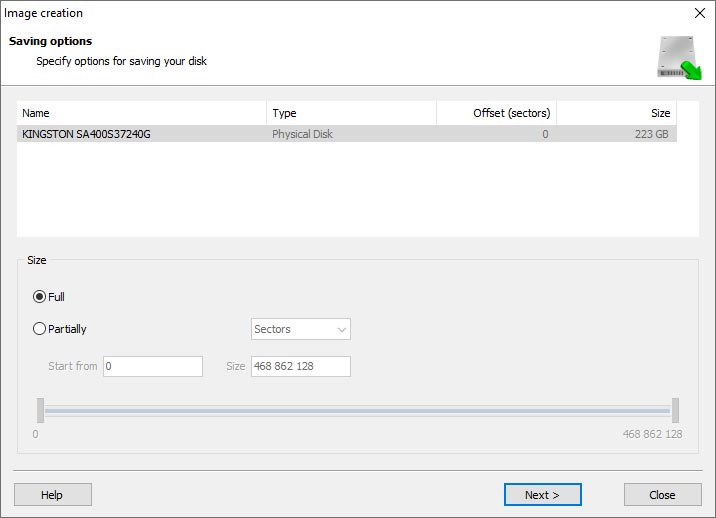
When the Image Creation Wizard opens, select whether you want to save the entire disk or only a specific region. Adjust the settings and click Next.
-
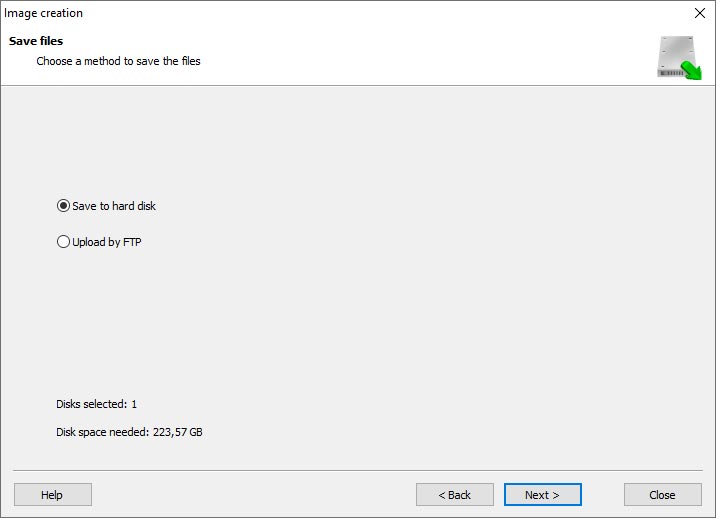
Choose the directory where the image will be saved. You may select any available disk connected to your PC or upload the image via FTP.


Where Are the User’s Files Actually Stored?
The Actidata actiLib 2U LTO Tape Library network-attached storage keeps OS Linux operating system files on a separate RAID 1 (mirrored) array. Usually, all NAS systems create several volumes on every hard disk, and the first of them takes up to 2 Gb of space. This is where operating system files are stored. Other volumes are united into a RAID array where user’s data is written.
RAID Recovery Software: Detailed Comparison
| Product | Operating system | RAID controller support | Supported file systems | Virtual RAID controller support | Data recovery from damaged RAID | File preview |
|---|---|---|---|---|---|---|
| Hetman RAID Recovery | Windows, Linux, MacOS | Yes, over 100 controllers | FAT, exFAT, NTFS, ReFS, APFS, HFS+, Ext4, Ext3, Ext2, ReiserFS, Btrfs, VMFS, Hikvision, XFS, UFS, ZFS | Yes | Yes | Yes |
| DiskInternals RAID Recovery | Windows | Yes, over 10 controllers | FAT, NTFS, Ext2/3/4, HFS+ | No | Yes | Yes |
| R-Studio | Windows, Mac, Linux | Yes, over 20 controllers | FAT, NTFS, Ext2/3/4, HFS+ | Yes | Yes | Yes |
| UFS Explorer RAID Recovery | Windows, Mac, Linux | Yes, over 100 controllers | FAT, NTFS, Ext2/3/4, HFS+ | Yes | Yes | Yes |
| EaseUS Data Recovery | Windows | Yes, over 20 controllers | FAT, NTFS, Ext2/3/4, HFS+ | No | Yes | Yes |
| ReclaiMe Free RAID Recovery | Windows | Yes, over 100 controllers | FAT, NTFS, Ext2/3/4, HFS+ | Yes | Yes | Yes |



Yes, data recovery from a NAS Actidata actiLib 2U LTO Tape Library device can be performed even if there are issues with the storage controller. In such cases, the data recovery process would typically involve bypassing the storage controller and accessing the tapes directly. This can be done by using specialized tape recovery software or by sending the tapes to a professional data recovery service that has the necessary expertise and equipment to handle tape recoveries. It is important to note that data recovery from tapes can be a complex and time-consuming process, so it is recommended to seek professional assistance for the best chance of successful recovery.