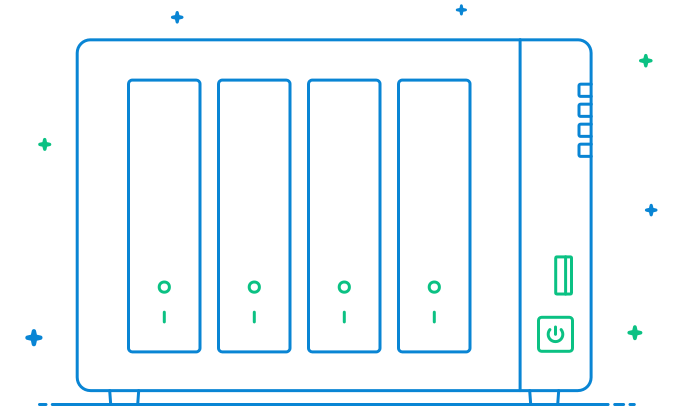
Restoring a Faulty RAID Array on NAS Buffalo Drive Station HD-QS1.0TSU2/R5 with Several Damaged Drives

Has your NAS Buffalo Drive Station HD-QS1.0TSU2/R5 suddenly lost its network drive and you’re unsure what to do next? Did the RAID array collapse, making your files inaccessible? Is the device throwing errors during startup? Perhaps you accidentally rebuilt the RAID array or several hard drives failed at the same time?

Restoring a Faulty RAID Array on NAS Buffalo Drive Station HD-QS1.0TSU2/R5 with Several Damaged Drives

Buffalo Drive Station HD-QS1.0TSU2/R5 NAS Data Recovery in 2025

In this step-by-step tutorial, we’ll show you how to rebuild your RAID and recover data from an Drive Station HD-QS1.0TSU2/R5. We’ll walk through the most common causes of failure and demonstrate proven methods to restore files from a lost or degraded RAID array.

Restoring a Faulty RAID Array on NAS Buffalo Drive Station HD-QS1.0TSU2/R5 with Several Damaged Drives

RAID Recovery™ 2.8
Recover data from damaged RAID arrays inaccessible from a computer.
Download

Why Regular Data Recovery Tools Can’t Restore Files from RAID

Conventional hard drives store user data by writing it sequentially across the disk surface, which means an entire file is typically located on a single drive. In contrast, when data is written to a RAID array, each file is split into multiple fragments. These fragments are then distributed and written in sequence across all the drives in the array. Depending on the configuration, fragment sizes can range from 2 KB to 2 MB, so every file is physically stored across several disks at once.

This approach significantly increases read and write performance — after all, writing two halves of a 1 GB file to two drives simultaneously is much faster than writing the full 1 GB to a single disk. However, this same mechanism makes file recovery far more complex.

Different RAID levels use different methods to distribute and protect data. On top of that, manufacturers like Buffalo often add their own proprietary structures and variations. As a result, data can be written to disks in many different formats, and each requires a specific approach during recovery.

Are there any data storage capacity limitations that can impact data loss risks for NAS Buffalo Drive Station HD-QS1.0TSU2/R5 devices?

Yes, there are data storage capacity limitations that can impact data loss risks for NAS Buffalo Drive Station HD-QS1.0TSU2/R5 devices.

The Buffalo Drive Station HD-QS1.0TSU2/R5 is a RAID storage device that supports up to four hard drives in a RAID 0, 1, 5, or 10 configuration. Each hard drive can have a maximum capacity of 1TB, so the total storage capacity of the device can be up to 4TB.

One of the main risks of data loss in RAID systems is the failure of one or more hard drives. In a RAID 0 configuration, if any of the drives fail, all the data on the RAID array can be lost. In RAID 1, data is mirrored across multiple drives, so if one drive fails, the data can still be accessed from the remaining drives. However, if multiple drives fail simultaneously, data loss can occur.

Another risk is the limited capacity for expansion. The Buffalo Drive Station HD-QS1.0TSU2/R5 has a maximum storage capacity of 4TB, and it does not support adding additional drives or expanding the storage capacity beyond that limit. If you reach the maximum capacity and need more storage, you will have to replace the existing drives with larger ones, which can be a time-consuming and potentially risky process.

To mitigate the risks of data loss, it is recommended to regularly back up the data on the NAS device to an external storage solution or cloud storage. This way, even if the NAS device fails or experiences data loss, you can still recover your data from the backup. Additionally, monitoring the health of the hard drives and replacing any failing drives promptly can help prevent data loss.

How to Remove Hard Disks from Your NAS and Connect Them to a PC

Although the NAS Drive Station HD-QS1.0TSU2/R5 can be accessed over the network, you still need to remove its hard disks and connect them directly to a Windows PC. Only then can the recovery software properly scan and analyze the drives. Follow these steps:

  1. Power off the NAS and disconnect it from the power source.

    WARNING! Before removing any drives, carefully read the device manual. Improper actions may damage both the NAS enclosure and the hard disks in the RAID array.

  2. Remove the hard disks one by one, gently sliding each drive out of its slot. Remember that hard disks are highly sensitive: any impact or drop can cause serious physical damage.

  3. Label each hard disk according to its position inside the NAS. The order of the drives is crucial for correct RAID reconstruction.

  4. Connect the drives to your computer. In this video, we explain which ports you can use to connect hard disks and what to do if your PC does not have enough free connectors.

    Go to view

    How to Order Remote Data Recovery

    How to Order Remote Data Recovery

Step-by-Step Data Recovery with Hetman RAID Recovery

Hetman Raid Recovery

This program restores data from damaged RAID arrays and is fully compatible with Buffalo Drive Station HD-QS1.0TSU2/R5. Each hard disk in the array contains technical metadata describing how files were written. When launched, Hetman RAID Recovery analyzes this metadata, automatically reconstructs the damaged array, and provides access to its contents. After that, you can browse the recovered disk and save your files. The program can also restore files that were accidentally deleted from the network drive.

Go to view
How to recover data from a Buffalo

How to recover data from a Buffalo

Drive Station HD-QS1.0TSU2/R5 has 4 HDD slots, and it supports the following array types:

  • RAID 0;
  • RAID 1;
  • RAID 5;
  • RAID 6;
  • JBOD;

NAS supports:

  • exFAT, VFAT, FAT 12 / 16 / 32;
  • NTFS / ReFS;
  • APFS / HFS+;
  • Ext2 / 3 / 4 / ReiserFS / XFS / UFS / ZFS / Btrfs;
  • VMFS / HikvisionFS;

How to Safely Recover Data from Disk Images

This utility allows you to create a complete copy of a disk and work with the disk image instead of the physical drive. This approach helps protect your data from:

  • Overwriting during the recovery process;
  • Additional data loss caused by bad sectors;
  • User errors.

To create a disk image, follow these steps:

  1. Ensure you have enough free space to store the image. Its size will typically match the size of the original disk.

  2. In the main window, select the target disk and choose Tools - Save Disk. You can also select multiple disks if needed.

  3. When the Image Creation Wizard opens, select whether you want to save the entire disk or only a specific region. Adjust the settings and click Next.
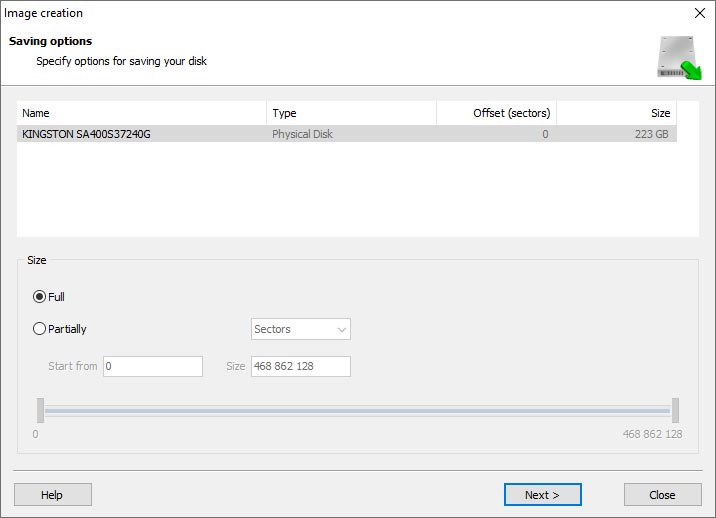
    Hetman RAID Recovery: Image Creation Wizard
  4. Choose the directory where the image will be saved. You may select any available disk connected to your PC or upload the image via FTP.
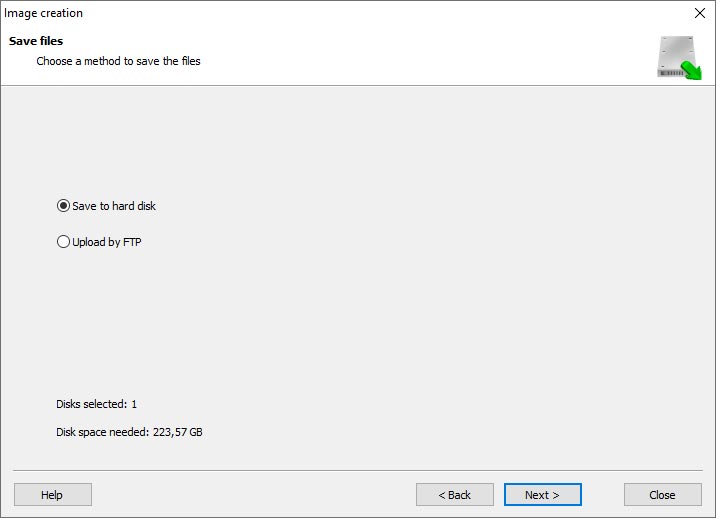
    Hetman RAID Recovery: Choose a disk or save the image via FTP

Where Are the User’s Files Actually Stored?

The Buffalo Drive Station HD-QS1.0TSU2/R5 network-attached storage keeps OS Linux operating system files on a separate RAID 1 (mirrored) array. Usually, all NAS systems create several volumes on every hard disk, and the first of them takes up to 2 Gb of space. This is where operating system files are stored. Other volumes are united into a RAID array where user’s data is written.

RAID Recovery Software: Detailed Comparison

Product Operating system RAID controller support Supported file systems Virtual RAID controller support Data recovery from damaged RAID File preview
Hetman RAID Recovery Windows, Linux, MacOS Yes, over 100 controllers FAT, exFAT, NTFS, ReFS, APFS, HFS+, Ext4, Ext3, Ext2, ReiserFS, Btrfs, VMFS, Hikvision, XFS, UFS, ZFS Yes Yes Yes
DiskInternals RAID Recovery Windows Yes, over 10 controllers FAT, NTFS, Ext2/3/4, HFS+ No Yes Yes
R-Studio Windows, Mac, Linux Yes, over 20 controllers FAT, NTFS, Ext2/3/4, HFS+ Yes Yes Yes
UFS Explorer RAID Recovery Windows, Mac, Linux Yes, over 100 controllers FAT, NTFS, Ext2/3/4, HFS+ Yes Yes Yes
EaseUS Data Recovery Windows Yes, over 20 controllers FAT, NTFS, Ext2/3/4, HFS+ No Yes Yes
ReclaiMe Free RAID Recovery Windows Yes, over 100 controllers FAT, NTFS, Ext2/3/4, HFS+ Yes Yes Yes

Feedback

We will be happy to answer your questions!

Comments (3)

  • Hetman Software: Data Recovery
    Hetman Software: Data Recovery 9.08.2022 12:31 #
    If you want to ask a question about data recovery, from NAS Drive Station HD-QS1.0TSU2/R5, feel free to leave a comment!
  • Addison Wilder
    Addison Wilder 28.08.2023 01:53 #
    Is it possible to recover data from a NAS Buffalo Drive Station HD-QS1.0TSU2/R5 device that has been affected by a natural disaster such as flooding or earthquake?
    • Hetman Software
      Hetman Software 28.08.2023 03:00 #

      Recovering data from a NAS Buffalo Drive Station HD-QS1.0TSU2/R5 device that has been affected by a natural disaster such as flooding or earthquake is not guaranteed, but it may be possible depending on the extent of the damage. Here are a few steps you can take:

      1. Safety first: Ensure your safety and prioritize your well-being before attempting any data recovery.
      2. Dry the device: If the NAS drive has been submerged in water, remove it from the affected area and allow it to dry completely. Do not power it on until it is completely dry, as this may cause further damage.
      3. Professional data recovery: Contact a professional data recovery service that specializes in dealing with water or physical damage. They have specialized equipment and expertise to recover data from damaged devices. Be prepared for the fact that this can be an expensive service.
      4. Assess the damage: If the device has been physically damaged or exposed to extreme conditions, it may be more challenging to recover data. In such cases, professional assistance becomes even more crucial.
      5. Backup and redundancy: Going forward, it's advisable to have a backup strategy in place to prevent potential data loss in the future. Regularly backup your important data to multiple locations, including off-site or cloud storage.

      Remember, the chances of successful data recovery depend on the severity of the damage, so it's important to consult with professionals who can assess the situation and provide the best course of action.

Post comment
User
Your email address will not be published. Required fields are marked *

Vladimir Artiukh

Author: Vladimir Artiukh, Technical Writer

Vladimir Artiukh is a technical writer for Hetman Software, as well as the voice and face of their English-speaking YouTube channel, Hetman Software: Data Recovery for Windows. He handles tutorials, how-tos, and detailed reviews on how the company’s tools work with all kinds of data storage devices.

Oleg Afonin

Editor: Oleg Afonin, Technical Writer

Oleg Afonin is an expert in mobile forensics, data recovery and computer systems. He often attends large data security conferences, and writes several blogs for such resources as xaker.ru, Elcomsoft and Habr. In addition to his online activities, Oleg’s articles are also published in professional magazines. Also, Oleg Afonin is the co-author of a well-known book, Mobile Forensics - Advanced Investigative Strategies.

Share

Questions and answers

  • How can I configure the RAID settings on the NAS Buffalo Drive Station HD-QS1.0TSU2/R5?

    To configure the RAID settings on the Buffalo Drive Station HD-QS1.0TSU2/R5 NAS, follow these steps:

    1. Connect the NAS to your computer using the provided USB cable.
    2. Power on the NAS and wait for it to initialize.
    3. Open a web browser on your computer and enter the IP address of the NAS in the address bar. The default IP address is usually "192.168.11.150".
    4. Press Enter to access the NAS web interface.
    5. Enter the default login credentials. The default username is "admin" and the default password is "password". If you have changed the login credentials, use the updated username and password.
    6. After logging in, you will be presented with the NAS management interface.
    7. Navigate to the "Storage" or "RAID" section, depending on the NAS firmware version.
    8. In this section, you should see options to configure RAID settings.
    9. Select the RAID level you want to configure (e.g., RAID 0, RAID 1, RAID 5, etc.).
    10. Follow the on-screen prompts to set up the RAID configuration. This may involve selecting the number of drives, defining the RAID level, and setting up other parameters such as strip size and disk format.
    11. Once you have configured the RAID settings, save the changes and wait for the NAS to initialize the RAID array. This process may take some time, depending on the size and number of drives in the array.
    12. Once the RAID array is initialized, you can start using the NAS with the configured RAID settings.

    It is important to note that configuring RAID settings will erase all data on the drives, so ensure you have a backup of any important data before proceeding with the RAID configuration.

  • What are the available network settings options for the NAS Buffalo Drive Station HD-QS1.0TSU2/R5?

    The available network settings options for the NAS Buffalo Drive Station HD-QS1.0TSU2/R5 include:

    1. IP Address: You can set a static IP address for the NAS or configure it to obtain an IP address automatically from a DHCP server.
    2. Subnet Mask: This setting determines the network range of the NAS. It should match the subnet mask of your network.
    3. Default Gateway: The default gateway is the IP address of the router or gateway device that connects your network to the internet. This setting allows the NAS to communicate with devices outside of your local network.
    4. DNS Server: You can specify the IP addresses of DNS servers that the NAS should use for domain name resolution.
    5. Workgroup: The workgroup setting determines the network workgroup or domain that the NAS belongs to. It should match the workgroup or domain of your network.
    6. Bonjour: Bonjour is Apple's zero-configuration networking protocol. Enabling this option allows the NAS to be automatically discovered and accessed by other devices on the network.
    7. FTP Server: You can enable or disable the built-in FTP server on the NAS. If enabled, you can configure additional FTP settings such as port number and access permissions.
    8. SMB Server: SMB (Server Message Block) is a file sharing protocol used by Windows. Enabling the SMB server allows Windows devices to access and share files on the NAS.
    9. AFP Server: AFP (Apple Filing Protocol) is a file sharing protocol used by Mac computers. Enabling the AFP server allows Mac devices to access and share files on the NAS.
    10. NFS Server: NFS (Network File System) is a file sharing protocol commonly used in Unix and Linux environments. Enabling the NFS server allows Unix/Linux devices to access and share files on the NAS.

    These are some of the main network settings options available for the NAS Buffalo Drive Station HD-QS1.0TSU2/R5. The exact options may vary depending on the specific firmware version and configuration of the device.

  • Can you guide me through the process of setting up user permissions and access control on the NAS Buffalo Drive Station HD-QS1.0TSU2/R5?

    Certainly! Here's a step-by-step guide on setting up user permissions and access control on the NAS Buffalo Drive Station HD-QS1.0TSU2/R5:

    1. Connect the NAS Buffalo Drive Station HD-QS1.0TSU2/R5 to your network and power it on.
    2. Open a web browser on a computer connected to the same network and enter the IP address of the NAS in the address bar. The default IP address is usually "192.168.0.1" or "192.168.11.150". Press Enter.
    3. You will be prompted to log in. Enter the default username and password. The default username is "admin", and the default password is "password". Click Login.
    4. Once logged in, you will be directed to the NAS management interface. Look for a section or tab related to "Users" or "Access Control".
    5. In the Users/Access Control section, you should find an option to create new users. Click on it.
    6. Provide a username and password for the new user you want to create. You may also have the option to assign a group to the user, which can help manage permissions more easily. Click Save or Apply to create the user.
    7. Next, look for an option to set permissions for the created user. This option may be under the same Users/Access Control section or in a separate Permissions section.
    8. In the permissions settings, you can define access rights for the user. This typically includes read/write permissions, access to specific folders or directories, and other privileges. Customize the permissions according to your requirements and save the changes.
    9. Repeat steps 5-8 for any additional users you want to create and configure permissions for.
    10. Once you have set up user permissions, you may also want to configure access control. This allows you to define who can access the NAS from the network.
    11. Look for an Access Control or Firewall section within the NAS management interface. Here, you can specify IP addresses or ranges that are allowed or denied access to the NAS.
    12. Configure the access control settings according to your preferences. For example, you can allow access only from specific IP addresses or block access from certain IP addresses. Save the changes.
    13. After setting up user permissions and access control, it's recommended to test the configurations. Try accessing the NAS using the created user accounts from different devices on the network to ensure the permissions and access restrictions are working as intended.

    Note: The exact steps and options may vary slightly depending on the firmware version and interface of your NAS Buffalo Drive Station HD-QS1.0TSU2/R5. It's always a good idea to consult the user manual or documentation provided by Buffalo for detailed instructions specific to your device.