
- Why Regular Data Recovery Tools Can’t Restore Files from RAID
- Key Information About the NAS Buffalo TeraStation TS5800D3208V5
- How to Remove Hard Disks from Your NAS and Connect Them to a PC
Why Regular Data Recovery Tools Can’t Restore Files from RAID
Conventional hard drives store user data by writing it sequentially across the disk surface, which means an entire file is typically located on a single drive. In contrast, when data is written to a RAID array, each file is split into multiple fragments. These fragments are then distributed and written in sequence across all the drives in the array. Depending on the configuration, fragment sizes can range from 2 KB to 2 MB, so every file is physically stored across several disks at once.
This approach significantly increases read and write performance — after all, writing two halves of a 1 GB file to two drives simultaneously is much faster than writing the full 1 GB to a single disk. However, this same mechanism makes file recovery far more complex.
Different RAID levels use different methods to distribute and protect data. On top of that, manufacturers like Buffalo often add their own proprietary structures and variations. As a result, data can be written to disks in many different formats, and each requires a specific approach during recovery.
Can remote access to NAS Buffalo TeraStation TS5800D3208V5 devices pose additional data loss risks?
Remote access to NAS Buffalo TeraStation TS5800D3208V5 devices can potentially pose additional data loss risks if not properly secured and managed. Here are a few factors to consider:
- Security vulnerabilities: If remote access is not properly secured, it can expose the device to potential security breaches. Hackers or unauthorized users may attempt to gain access to the device, potentially leading to data loss or unauthorized modifications.
- Weak passwords: Weak or easily guessable passwords can make it easier for attackers to gain access to the NAS device remotely. It is important to use strong and unique passwords, enable two-factor authentication if available, and regularly update passwords to minimize the risk.
- Network vulnerabilities: Remote access often relies on network connections, which can introduce additional risks. If the network is not properly secured, it may be susceptible to eavesdropping, man-in-the-middle attacks, or other network-based threats that can lead to data loss.
- Accidental deletion or modification: Remote access allows users to access and manage the NAS device from anywhere, increasing the chances of accidental deletion or modification of critical data. Without proper precautions, accidental actions can result in permanent data loss.
To mitigate these risks, it is important to follow best practices for securing remote access to NAS devices:
- Ensure the NAS device's firmware is up to date to address any security vulnerabilities.
- Implement strong passwords and enable two-factor authentication if available.
- Use secure protocols such as HTTPS or VPN for remote access.
- Restrict remote access to trusted IP addresses or networks.
- Regularly backup data stored on the NAS device to an off-site location.
- Monitor access logs and enable alerts for any suspicious activities.
- Educate users about best practices and potential risks associated with remote access.
By following these precautions and maintaining good security practices, the risks associated with remote access to NAS Buffalo TeraStation TS5800D3208V5 devices can be minimized.
How to Remove Hard Disks from Your NAS and Connect Them to a PC
Although the NAS TeraStation TS5800D3208V5 can be accessed over the network, you still need to remove its hard disks and connect them directly to a Windows PC. Only then can the recovery software properly scan and analyze the drives. Follow these steps:
-
Power off the NAS and disconnect it from the power source.
WARNING! Before removing any drives, carefully read the device manual. Improper actions may damage both the NAS enclosure and the hard disks in the RAID array.
-
Remove the hard disks one by one, gently sliding each drive out of its slot. Remember that hard disks are highly sensitive: any impact or drop can cause serious physical damage.
-
Label each hard disk according to its position inside the NAS. The order of the drives is crucial for correct RAID reconstruction.
-
Connect the drives to your computer. In this video, we explain which ports you can use to connect hard disks and what to do if your PC does not have enough free connectors.
Go to view
Step-by-Step Data Recovery with Hetman RAID Recovery

This program restores data from damaged RAID arrays and is fully compatible with Buffalo TeraStation TS5800D3208V5. Each hard disk in the array contains technical metadata describing how files were written. When launched, Hetman RAID Recovery analyzes this metadata, automatically reconstructs the damaged array, and provides access to its contents. After that, you can browse the recovered disk and save your files. The program can also restore files that were accidentally deleted from the network drive.
How to recover data from a Buffalo
TeraStation TS5800D3208V5 has 1 HDD slots, and it supports the following array types:
- RAID 0;
- RAID 1;
- RAID 5;
- RAID 6;
- RAID 50;
- RAID 60;
- JBOD;
NAS supports:
- exFAT, VFAT, FAT 12 / 16 / 32;
- NTFS / ReFS;
- APFS / HFS+;
- Ext2 / 3 / 4 / ReiserFS / XFS / UFS / ZFS / Btrfs;
- VMFS / HikvisionFS;
How to Safely Recover Data from Disk Images
This utility allows you to create a complete copy of a disk and work with the disk image instead of the physical drive. This approach helps protect your data from:
- Overwriting during the recovery process;
- Additional data loss caused by bad sectors;
- User errors.
To create a disk image, follow these steps:
-
Ensure you have enough free space to store the image. Its size will typically match the size of the original disk.
-
In the main window, select the target disk and choose Tools - Save Disk. You can also select multiple disks if needed.
-
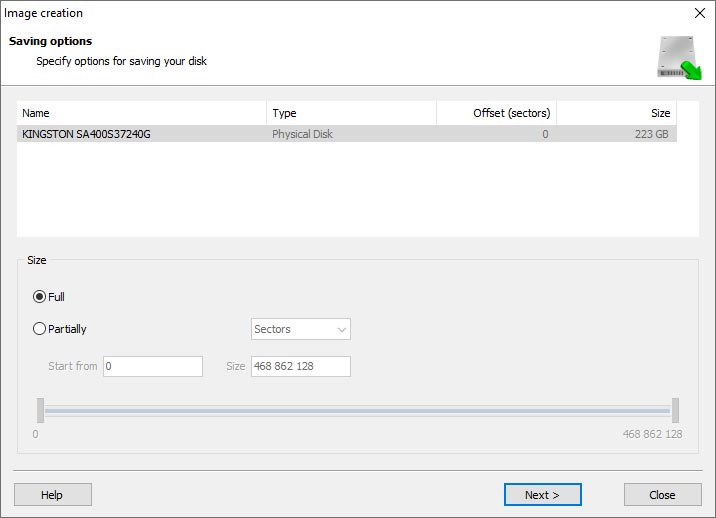
When the Image Creation Wizard opens, select whether you want to save the entire disk or only a specific region. Adjust the settings and click Next.
-
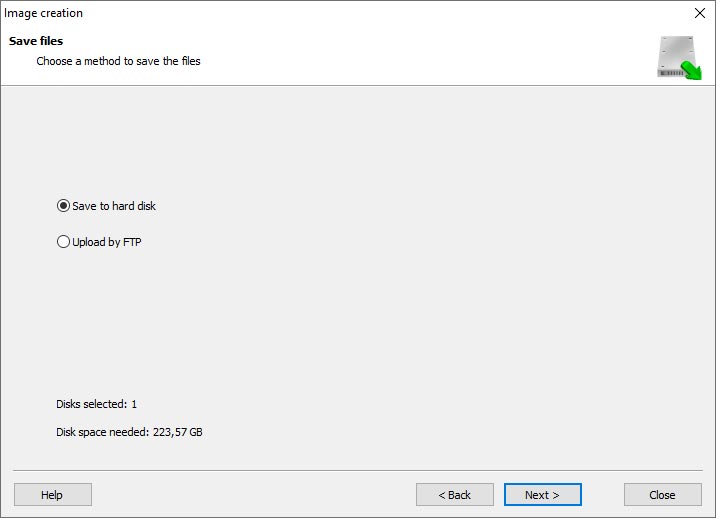
Choose the directory where the image will be saved. You may select any available disk connected to your PC or upload the image via FTP.


Where Are the User’s Files Actually Stored?
The Buffalo TeraStation TS5800D3208V5 network-attached storage keeps OS Linux operating system files on a separate RAID 1 (mirrored) array. Usually, all NAS systems create several volumes on every hard disk, and the first of them takes up to 2 Gb of space. This is where operating system files are stored. Other volumes are united into a RAID array where user’s data is written.
RAID Recovery Software: Detailed Comparison
| Product | Operating system | RAID controller support | Supported file systems | Virtual RAID controller support | Data recovery from damaged RAID | File preview |
|---|---|---|---|---|---|---|
| Hetman RAID Recovery | Windows, Linux, MacOS | Yes, over 100 controllers | FAT, exFAT, NTFS, ReFS, APFS, HFS+, Ext4, Ext3, Ext2, ReiserFS, Btrfs, VMFS, Hikvision, XFS, UFS, ZFS | Yes | Yes | Yes |
| DiskInternals RAID Recovery | Windows | Yes, over 10 controllers | FAT, NTFS, Ext2/3/4, HFS+ | No | Yes | Yes |
| R-Studio | Windows, Mac, Linux | Yes, over 20 controllers | FAT, NTFS, Ext2/3/4, HFS+ | Yes | Yes | Yes |
| UFS Explorer RAID Recovery | Windows, Mac, Linux | Yes, over 100 controllers | FAT, NTFS, Ext2/3/4, HFS+ | Yes | Yes | Yes |
| EaseUS Data Recovery | Windows | Yes, over 20 controllers | FAT, NTFS, Ext2/3/4, HFS+ | No | Yes | Yes |
| ReclaiMe Free RAID Recovery | Windows | Yes, over 100 controllers | FAT, NTFS, Ext2/3/4, HFS+ | Yes | Yes | Yes |



Yes, data recovery from a NAS Buffalo TeraStation TS5800D3208V5 device can still be possible even if the device is not booting or starting up properly. In such cases, it is recommended to contact a professional data recovery service provider who specializes in NAS devices. They have the expertise and tools to recover data from malfunctioning or non-bootable NAS devices. However, it is important to note that the success of data recovery depends on the extent of damage to the device and the condition of the storage drives inside it.