How to Identify and Recover from Mechanical and Logical Failures in NAS QNAP QVP-41A RAID Arrays

Has your NAS QNAP QVP-41A suddenly lost its network drive and you’re unsure what to do next? Did the RAID array collapse, making your files inaccessible? Is the device throwing errors during startup? Perhaps you accidentally rebuilt the RAID array or several hard drives failed at the same time?

How to Identify and Recover from Mechanical and Logical Failures in NAS QNAP QVP-41A RAID Arrays

QNAP QVP-41A NAS Data Recovery in 2025

In this step-by-step tutorial, we’ll show you how to rebuild your RAID and recover data from an QVP-41A. We’ll walk through the most common causes of failure and demonstrate proven methods to restore files from a lost or degraded RAID array.

How to Identify and Recover from Mechanical and Logical Failures in NAS QNAP QVP-41A RAID Arrays

RAID Recovery™ 2.8
Recover data from damaged RAID arrays inaccessible from a computer.
Download

Why Regular Data Recovery Tools Can’t Restore Files from RAID

Conventional hard drives store user data by writing it sequentially across the disk surface, which means an entire file is typically located on a single drive. In contrast, when data is written to a RAID array, each file is split into multiple fragments. These fragments are then distributed and written in sequence across all the drives in the array. Depending on the configuration, fragment sizes can range from 2 KB to 2 MB, so every file is physically stored across several disks at once.

This approach significantly increases read and write performance — after all, writing two halves of a 1 GB file to two drives simultaneously is much faster than writing the full 1 GB to a single disk. However, this same mechanism makes file recovery far more complex.

Different RAID levels use different methods to distribute and protect data. On top of that, manufacturers like QNAP often add their own proprietary structures and variations. As a result, data can be written to disks in many different formats, and each requires a specific approach during recovery.

Are there any known issues or limitations when using NAS QNAP QVP-41A devices with virtualization platforms such as VMware or Hyper-V?

There are a few known issues and limitations when using NAS QNAP QVP-41A devices with virtualization platforms like VMware or Hyper-V. Some of these include:

  1. Limited hardware resources: The QVP-41A devices have limited hardware resources such as CPU and memory, which can affect the performance of virtual machines running on these devices. It is important to consider the workload and resource requirements of the virtual machines before deploying them on the QVP-41A.
  2. Limited support for advanced virtualization features: The QVP-41A devices may not support advanced virtualization features offered by platforms like VMware or Hyper-V. This can include features like live migration, high availability, or clustering. It is important to check the compatibility and feature support matrix provided by QNAP for specific details.
  3. Limited scalability: The QVP-41A devices have a limited number of drive bays and may not support expansion units. This can limit the scalability of the storage capacity for virtual machines running on these devices. It is important to consider the storage requirements and growth plans before deploying virtual machines on the QVP-41A.
  4. Limited network connectivity: The QVP-41A devices may have limited network connectivity options, such as a single or limited number of Gigabit Ethernet ports. This can impact the network performance and bandwidth available for virtual machines running on these devices. It is important to consider the network requirements and workload of the virtual machines before deploying them on the QVP-41A.
  5. Limited virtualization platform support: The QVP-41A devices may have limited support for virtualization platforms other than VMware or Hyper-V. It is important to check the compatibility and support matrix provided by QNAP to ensure compatibility with the desired virtualization platform.

It is recommended to thoroughly review the specifications, compatibility matrix, and limitations provided by QNAP for the QVP-41A devices before deploying them with virtualization platforms.

How to Remove Hard Disks from Your NAS and Connect Them to a PC

Although the NAS QVP-41A can be accessed over the network, you still need to remove its hard disks and connect them directly to a Windows PC. Only then can the recovery software properly scan and analyze the drives. Follow these steps:

  1. Power off the NAS and disconnect it from the power source.

    WARNING! Before removing any drives, carefully read the device manual. Improper actions may damage both the NAS enclosure and the hard disks in the RAID array.

  2. Remove the hard disks one by one, gently sliding each drive out of its slot. Remember that hard disks are highly sensitive: any impact or drop can cause serious physical damage.

  3. Label each hard disk according to its position inside the NAS. The order of the drives is crucial for correct RAID reconstruction.

  4. Connect the drives to your computer. In this video, we explain which ports you can use to connect hard disks and what to do if your PC does not have enough free connectors.

    Go to view

    How to Order Remote Data Recovery

    How to Order Remote Data Recovery

Step-by-Step Data Recovery with Hetman RAID Recovery

Hetman Raid Recovery

This program restores data from damaged RAID arrays and is fully compatible with QNAP QVP-41A. Each hard disk in the array contains technical metadata describing how files were written. When launched, Hetman RAID Recovery analyzes this metadata, automatically reconstructs the damaged array, and provides access to its contents. After that, you can browse the recovered disk and save your files. The program can also restore files that were accidentally deleted from the network drive.

Go to view
How to recover data from a QNAP

How to recover data from a QNAP

QVP-41A has 4 HDD slots, and it supports the following array types:

  • RAID 6;
  • RAID 5;
  • RAID 10;
  • RAID 0;
  • RAID 1;
  • JBOD;

NAS supports:

  • ZFS;
  • EXT4;
  • EXT3;
  • exFAT;
  • FAT32 (External Disk Only);
  • NTFS (External Disk Only);
  • HFS+ (External Disk Read Only);

How to Safely Recover Data from Disk Images

This utility allows you to create a complete copy of a disk and work with the disk image instead of the physical drive. This approach helps protect your data from:

  • Overwriting during the recovery process;
  • Additional data loss caused by bad sectors;
  • User errors.

To create a disk image, follow these steps:

  1. Ensure you have enough free space to store the image. Its size will typically match the size of the original disk.

  2. In the main window, select the target disk and choose Tools - Save Disk. You can also select multiple disks if needed.

  3. When the Image Creation Wizard opens, select whether you want to save the entire disk or only a specific region. Adjust the settings and click Next.
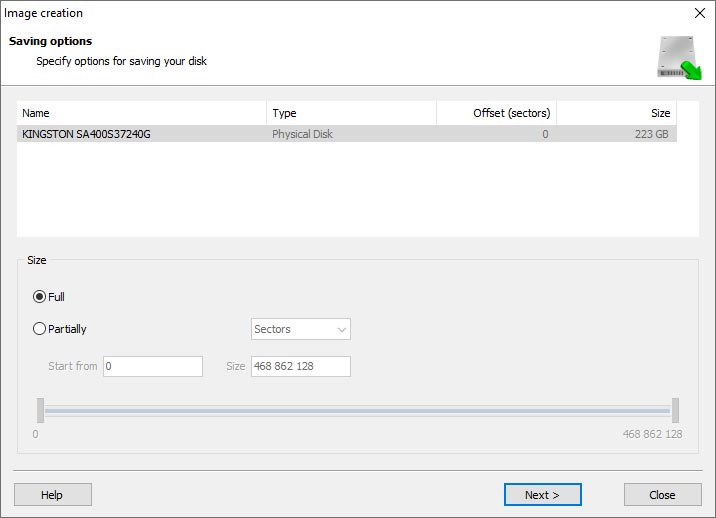
    Hetman RAID Recovery: Image Creation Wizard
  4. Choose the directory where the image will be saved. You may select any available disk connected to your PC or upload the image via FTP.
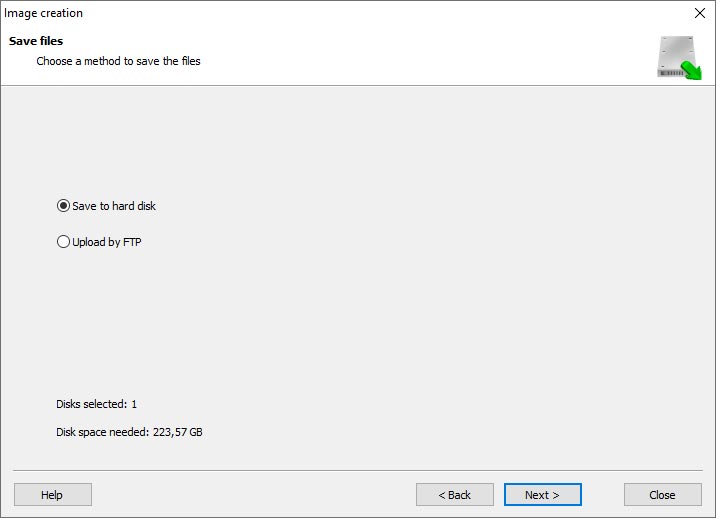
    Hetman RAID Recovery: Choose a disk or save the image via FTP

Where Are the User’s Files Actually Stored?

The QNAP QVP-41A network-attached storage keeps QTS (QuTS hero) operating system files on a separate RAID 1 (mirrored) array. Usually, all NAS systems create several volumes on every hard disk, and the first of them takes up to 2 Gb of space. This is where operating system files are stored. Other volumes are united into a RAID array where user’s data is written.

RAID Recovery Software: Detailed Comparison

Product Operating system RAID controller support Supported file systems Virtual RAID controller support Data recovery from damaged RAID File preview
Hetman RAID Recovery Windows, Linux, MacOS Yes, over 100 controllers FAT, exFAT, NTFS, ReFS, APFS, HFS+, Ext4, Ext3, Ext2, ReiserFS, Btrfs, VMFS, Hikvision, XFS, UFS, ZFS Yes Yes Yes
DiskInternals RAID Recovery Windows Yes, over 10 controllers FAT, NTFS, Ext2/3/4, HFS+ No Yes Yes
R-Studio Windows, Mac, Linux Yes, over 20 controllers FAT, NTFS, Ext2/3/4, HFS+ Yes Yes Yes
UFS Explorer RAID Recovery Windows, Mac, Linux Yes, over 100 controllers FAT, NTFS, Ext2/3/4, HFS+ Yes Yes Yes
EaseUS Data Recovery Windows Yes, over 20 controllers FAT, NTFS, Ext2/3/4, HFS+ No Yes Yes
ReclaiMe Free RAID Recovery Windows Yes, over 100 controllers FAT, NTFS, Ext2/3/4, HFS+ Yes Yes Yes

Feedback

We will be happy to answer your questions!

Comments (3)

  • Hetman Software: Data Recovery
    Hetman Software: Data Recovery 9.08.2022 12:31 #
    If you want to ask a question about data recovery, from NAS QVP-41A, feel free to leave a comment!
  • Josh Jex-Blake
    Josh Jex-Blake 18.09.2023 04:47 #
    Is it possible to recover data from a NAS QNAP QVP-41A device that has been affected by a firmware corruption or update failure?
    • Hetman Software
      Hetman Software 18.09.2023 05:00 #

      Yes, it is possible to recover data from a NAS QNAP QVP-41A device that has been affected by firmware corruption or update failure. Here are a few steps you can take to attempt data recovery:

      1. Contact QNAP Support: Reach out to QNAP support for guidance and assistance. They may provide you with specific instructions or tools to recover the data.
      2. Check for Backup: If you have a backup of your data, restore it to a new NAS device. This will ensure that you have access to your data without the need for data recovery.
      3. Power Cycle the NAS: Sometimes, a simple power cycle can resolve firmware corruption issues. Turn off the NAS, unplug it from the power source, wait for a few minutes, and then plug it back in. Power it on and check if the firmware corruption issue is resolved.
      4. Factory Reset: If the firmware corruption issue persists, you can try performing a factory reset. This will restore the NAS to its default settings. However, note that a factory reset will erase all data on the device, so proceed with caution.
      5. Seek Professional Data Recovery Services: If none of the above steps work, you may need to seek professional data recovery services. There are specialized companies that can recover data from corrupted NAS devices. They have the expertise and tools to extract data from the device's storage drives.

      Remember to always backup your data regularly to prevent data loss in case of firmware corruption or other issues.

Post comment
User
Your email address will not be published. Required fields are marked *

Vladimir Artiukh

Author: Vladimir Artiukh, Technical Writer

Vladimir Artiukh is a technical writer for Hetman Software, as well as the voice and face of their English-speaking YouTube channel, Hetman Software: Data Recovery for Windows. He handles tutorials, how-tos, and detailed reviews on how the company’s tools work with all kinds of data storage devices.

Oleg Afonin

Editor: Oleg Afonin, Technical Writer

Oleg Afonin is an expert in mobile forensics, data recovery and computer systems. He often attends large data security conferences, and writes several blogs for such resources as xaker.ru, Elcomsoft and Habr. In addition to his online activities, Oleg’s articles are also published in professional magazines. Also, Oleg Afonin is the co-author of a well-known book, Mobile Forensics - Advanced Investigative Strategies.

Share

Questions and answers

  • What are the key features and capabilities of the NAS QNAP QVP-41A that make it suitable for use as a website server?

    The QNAP QVP-41A is a network-attached storage (NAS) device that offers several key features and capabilities that make it suitable for use as a website server:

    1. High-performance hardware: The QVP-41A is powered by an Intel Celeron quad-core processor and comes with 4GB DDR4 memory (expandable up to 8GB). This hardware ensures smooth and efficient operation, allowing it to handle website traffic and server tasks effectively.
    2. Multiple drive bays: The NAS comes with four drive bays, allowing for the installation of multiple hard drives or SSDs. This enables the creation of a RAID array for data redundancy and increased storage capacity. The ability to expand storage ensures that the website server can handle growing data requirements.
    3. Virtualization support: The QVP-41A supports virtualization technologies such as Virtualization Station and Container Station. This allows for the creation and management of virtual machines and containers, enabling the hosting of multiple websites or applications on a single device.
    4. Dual 10GbE ports: The NAS is equipped with dual 10 Gigabit Ethernet ports, providing high-speed network connectivity. This is crucial for serving website content quickly and efficiently, especially during periods of high traffic or data transfer.
    5. Comprehensive backup solutions: QNAP NAS devices are known for their robust backup capabilities. The QVP-41A supports various backup methods, including local, remote, and cloud backups. This ensures that website data is securely backed up and can be easily recovered in case of any issues.
    6. Scalability and expandability: The QVP-41A supports expansion units, allowing for the addition of more drive bays and storage capacity as needed. This scalability is essential for accommodating the growth of a website or multiple websites over time.
    7. Advanced security features: QNAP NAS devices offer a range of security features to protect the website server and its data. These include built-in antivirus, encryption options, IP blocking, and access control mechanisms. These features help safeguard the website from threats and unauthorized access.
    8. Intuitive management interface: QNAP provides a user-friendly web-based management interface called QTS. This interface allows for easy configuration, monitoring, and management of the NAS and its services, making it convenient to set up and maintain the website server.

    Overall, the QNAP QVP-41A combines powerful hardware, storage flexibility, virtualization support, high-speed networking, comprehensive backup options, security features, and intuitive management capabilities, making it a suitable choice for hosting websites and serving website content.

  • How does the NAS QNAP QVP-41A compare to other website server options in terms of performance, reliability, and ease of use?

    The NAS QNAP QVP-41A is not a website server, but rather a video transcoding accelerator card designed to enhance video processing capabilities in QNAP NAS systems. Therefore, it would not be appropriate to compare it directly with other website server options in terms of performance, reliability, and ease of use.

    However, in terms of its intended purpose, the QNAP QVP-41A can significantly improve video transcoding performance on compatible QNAP NAS systems. It features an Intel Core i5 processor, 8 GB DDR4 memory, and supports hardware-accelerated transcoding of H.264/H.265 videos.

    In terms of reliability, QNAP is known for producing high-quality NAS systems and accessories, so the QVP-41A can be expected to be reliable as well.

    Regarding ease of use, the QVP-41A is designed to be easily installed into compatible QNAP NAS systems, and the video transcoding acceleration can be enabled and configured through the QNAP NAS operating system. QNAP also provides user-friendly software interfaces and documentation to facilitate the setup and usage of their products.

    To compare website server options in terms of performance, reliability, and ease of use, it would be more relevant to consider factors such as CPU power, RAM capacity, storage options, network connectivity, operating system, software support, and customer reviews specific to website hosting requirements.

  • Can the NAS QNAP QVP-41A handle high traffic and resource-intensive websites? Are there any limitations or considerations to keep in mind when using it as a website server?

    The NAS QNAP QVP-41A is primarily designed for video surveillance applications and may not be the most suitable choice for hosting high traffic and resource-intensive websites. It has a quad-core Intel Celeron processor and 4GB of RAM, which may not provide sufficient power for handling heavy website traffic and resource-intensive tasks.

    When using it as a website server, there are a few limitations and considerations to keep in mind:

    1. Performance: Due to its limited processing power and memory, the QVP-41A may struggle to handle a high volume of concurrent website visitors or resource-intensive website applications. This could result in slower response times and potential performance issues.
    2. Storage: The QVP-41A comes with four drive bays for storage, which may not be sufficient for hosting large amounts of website data or media files. Consider the storage requirements of your website and ensure it aligns with the available storage capacity of the NAS.
    3. Network Bandwidth: The NAS has multiple Gigabit Ethernet ports for network connectivity, but high traffic websites may require higher network bandwidth to ensure smooth performance. Evaluate your website's traffic requirements and consider whether the NAS can handle the expected network load.
    4. Software Compatibility: The QVP-41A runs QNAP's QVR Pro surveillance software, which may not have the necessary features and optimizations for hosting websites. It is important to ensure that the NAS supports the required web server software, databases, and scripting languages needed for your website.

    Overall, while the QNAP QVP-41A can serve as a basic website server for small-scale or low-traffic websites, it may not be the best choice for high traffic and resource-intensive websites. Consider more powerful NAS models or dedicated web servers for such requirements.