NAS QNAP Turbo Station TS-128 / TS-128A RAID Controller Failure: Causes, Recovery, and Data Loss Prevention

Has your NAS QNAP Turbo Station TS-128 / TS-128A suddenly lost its network drive and you’re unsure what to do next? Did the RAID array collapse, making your files inaccessible? Is the device throwing errors during startup? Perhaps you accidentally rebuilt the RAID array or several hard drives failed at the same time?

NAS QNAP Turbo Station TS-128 / TS-128A RAID Controller Failure: Causes, Recovery, and Data Loss Prevention

QNAP Turbo Station TS-128 / TS-128A NAS Data Recovery in 2025

In this step-by-step tutorial, we’ll show you how to rebuild your RAID and recover data from an Turbo Station TS-128 / TS-128A. We’ll walk through the most common causes of failure and demonstrate proven methods to restore files from a lost or degraded RAID array.

NAS QNAP Turbo Station TS-128 / TS-128A RAID Controller Failure: Causes, Recovery, and Data Loss Prevention

RAID Recovery™ 2.8
Recover data from damaged RAID arrays inaccessible from a computer.
Download

Why Regular Data Recovery Tools Can’t Restore Files from RAID

Conventional hard drives store user data by writing it sequentially across the disk surface, which means an entire file is typically located on a single drive. In contrast, when data is written to a RAID array, each file is split into multiple fragments. These fragments are then distributed and written in sequence across all the drives in the array. Depending on the configuration, fragment sizes can range from 2 KB to 2 MB, so every file is physically stored across several disks at once.

This approach significantly increases read and write performance — after all, writing two halves of a 1 GB file to two drives simultaneously is much faster than writing the full 1 GB to a single disk. However, this same mechanism makes file recovery far more complex.

Different RAID levels use different methods to distribute and protect data. On top of that, manufacturers like QNAP often add their own proprietary structures and variations. As a result, data can be written to disks in many different formats, and each requires a specific approach during recovery.

Can device firmware rollback or downgrading impact data loss risks for NAS QNAP Turbo Station TS-128 / TS-128A devices?

Rolling back or downgrading the firmware on a NAS device like the QNAP Turbo Station TS-128/TS-128A can potentially introduce data loss risks. Here are a few reasons why:

  1. Compatibility issues: The newer firmware versions often come with bug fixes, security patches, and improved compatibility with hardware and software. Rolling back to an older firmware version may lead to compatibility issues, causing data corruption or loss.
  2. Feature loss: Firmware updates often introduce new features, enhancements, and performance improvements. Reverting to an older firmware version may result in the loss of these features, which could impact data accessibility or functionality.
  3. Security vulnerabilities: Older firmware versions may have known security vulnerabilities that have been addressed in newer updates. By downgrading the firmware, you expose your NAS device to potential security risks, including data breaches or unauthorized access.
  4. Data migration issues: If the newer firmware version introduced changes to the file system or data structure, rolling back to an older version may cause compatibility issues during the migration process. This can lead to data corruption or loss during the transition.

To minimize the risk of data loss, it is recommended to regularly back up your data before performing any firmware updates or downgrades. This way, if any issues arise during the process, you can restore your data from the backup. Additionally, it is advisable to consult the manufacturer's documentation or seek technical support before attempting any firmware rollback or downgrade.

How to Remove Hard Disks from Your NAS and Connect Them to a PC

Although the NAS Turbo Station TS-128 / TS-128A can be accessed over the network, you still need to remove its hard disks and connect them directly to a Windows PC. Only then can the recovery software properly scan and analyze the drives. Follow these steps:

  1. Power off the NAS and disconnect it from the power source.

    WARNING! Before removing any drives, carefully read the device manual. Improper actions may damage both the NAS enclosure and the hard disks in the RAID array.

  2. Remove the hard disks one by one, gently sliding each drive out of its slot. Remember that hard disks are highly sensitive: any impact or drop can cause serious physical damage.

  3. Label each hard disk according to its position inside the NAS. The order of the drives is crucial for correct RAID reconstruction.

  4. Connect the drives to your computer. In this video, we explain which ports you can use to connect hard disks and what to do if your PC does not have enough free connectors.

    Go to view

    How to Order Remote Data Recovery

    How to Order Remote Data Recovery

Step-by-Step Data Recovery with Hetman RAID Recovery

Hetman Raid Recovery

This program restores data from damaged RAID arrays and is fully compatible with QNAP Turbo Station TS-128 / TS-128A. Each hard disk in the array contains technical metadata describing how files were written. When launched, Hetman RAID Recovery analyzes this metadata, automatically reconstructs the damaged array, and provides access to its contents. After that, you can browse the recovered disk and save your files. The program can also restore files that were accidentally deleted from the network drive.

Go to view
How to recover data from a QNAP

How to recover data from a QNAP

Turbo Station TS-128 / TS-128A has 1 HDD slots, and it supports the following array types:

  • Q-RAID 1;

NAS supports:

  • EXT4;
  • EXT3;
  • FAT32 (External Disk Only);
  • NTFS (External Disk Only);
  • HFS+ (External Disk Read Only);

How to Safely Recover Data from Disk Images

This utility allows you to create a complete copy of a disk and work with the disk image instead of the physical drive. This approach helps protect your data from:

  • Overwriting during the recovery process;
  • Additional data loss caused by bad sectors;
  • User errors.

To create a disk image, follow these steps:

  1. Ensure you have enough free space to store the image. Its size will typically match the size of the original disk.

  2. In the main window, select the target disk and choose Tools - Save Disk. You can also select multiple disks if needed.

  3. When the Image Creation Wizard opens, select whether you want to save the entire disk or only a specific region. Adjust the settings and click Next.
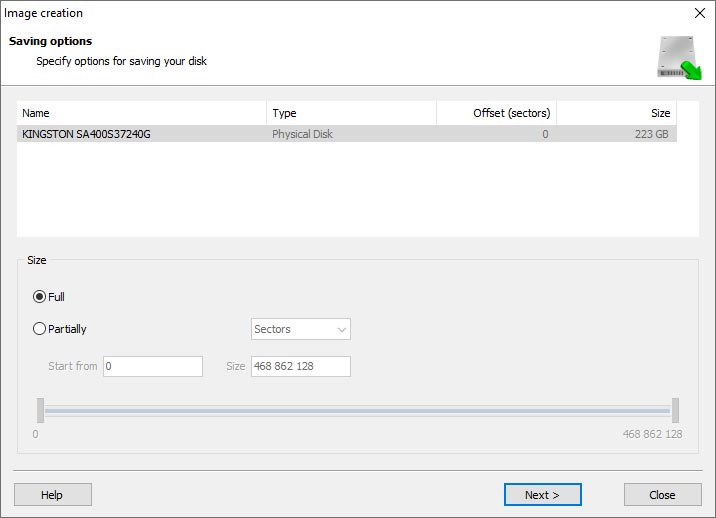
    Hetman RAID Recovery: Image Creation Wizard
  4. Choose the directory where the image will be saved. You may select any available disk connected to your PC or upload the image via FTP.
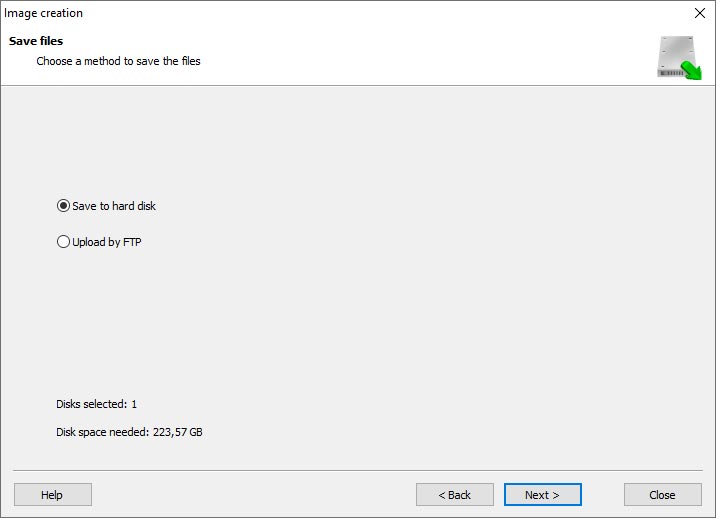
    Hetman RAID Recovery: Choose a disk or save the image via FTP

Where Are the User’s Files Actually Stored?

The QNAP Turbo Station TS-128 / TS-128A network-attached storage keeps QTS operating system files on a separate RAID 1 (mirrored) array. Usually, all NAS systems create several volumes on every hard disk, and the first of them takes up to 2 Gb of space. This is where operating system files are stored. Other volumes are united into a RAID array where user’s data is written.

RAID Recovery Software: Detailed Comparison

Product Operating system RAID controller support Supported file systems Virtual RAID controller support Data recovery from damaged RAID File preview
Hetman RAID Recovery Windows, Linux, MacOS Yes, over 100 controllers FAT, exFAT, NTFS, ReFS, APFS, HFS+, Ext4, Ext3, Ext2, ReiserFS, Btrfs, VMFS, Hikvision, XFS, UFS, ZFS Yes Yes Yes
DiskInternals RAID Recovery Windows Yes, over 10 controllers FAT, NTFS, Ext2/3/4, HFS+ No Yes Yes
R-Studio Windows, Mac, Linux Yes, over 20 controllers FAT, NTFS, Ext2/3/4, HFS+ Yes Yes Yes
UFS Explorer RAID Recovery Windows, Mac, Linux Yes, over 100 controllers FAT, NTFS, Ext2/3/4, HFS+ Yes Yes Yes
EaseUS Data Recovery Windows Yes, over 20 controllers FAT, NTFS, Ext2/3/4, HFS+ No Yes Yes
ReclaiMe Free RAID Recovery Windows Yes, over 100 controllers FAT, NTFS, Ext2/3/4, HFS+ Yes Yes Yes

Feedback

We will be happy to answer your questions!

Comments (1)

  • Hetman Software: Data Recovery
    Hetman Software: Data Recovery 9.08.2022 12:31 #
    If you want to ask a question about data recovery, from NAS Turbo Station TS-128 / TS-128A, feel free to leave a comment!
Post comment
User
Your email address will not be published. Required fields are marked *

Vladimir Artiukh

Author: Vladimir Artiukh, Technical Writer

Vladimir Artiukh is a technical writer for Hetman Software, as well as the voice and face of their English-speaking YouTube channel, Hetman Software: Data Recovery for Windows. He handles tutorials, how-tos, and detailed reviews on how the company’s tools work with all kinds of data storage devices.

Oleg Afonin

Editor: Oleg Afonin, Technical Writer

Oleg Afonin is an expert in mobile forensics, data recovery and computer systems. He often attends large data security conferences, and writes several blogs for such resources as xaker.ru, Elcomsoft and Habr. In addition to his online activities, Oleg’s articles are also published in professional magazines. Also, Oleg Afonin is the co-author of a well-known book, Mobile Forensics - Advanced Investigative Strategies.

Share

Questions and answers

  • What are the key features and capabilities of the QNAP Turbo Station TS-128 / TS-128A that make it suitable for use as a database server?

    The QNAP Turbo Station TS-128 / TS-128A is a network-attached storage (NAS) device that can be used as a database server. Some key features and capabilities that make it suitable for this purpose include:

    1. High-performance hardware: The TS-128 / TS-128A is equipped with a powerful ARM Cortex-A15 dual-core processor and 1GB/2GB DDR3 RAM, ensuring smooth and efficient database operations.
    2. Storage capacity: It supports a single 3.5-inch SATA hard drive, providing ample storage space for databases. Additionally, it supports hot-swapping, allowing for easy drive replacement and expansion.
    3. RAID support: The TS-128 / TS-128A supports various RAID configurations (including RAID 0, 1, and JBOD), providing data redundancy and protection against drive failures. This is crucial for maintaining the integrity of the database.
    4. Multiple connectivity options: It offers Gigabit Ethernet ports for fast and reliable network connectivity. This enables seamless communication between the database server and other devices on the network.
    5. Virtualization support: The TS-128 / TS-128A is compatible with virtualization technologies like Virtualization Station and Container Station. This allows for the creation of virtual machines or containers to run different database instances, optimizing resource allocation and enhancing scalability.
    6. Backup and disaster recovery: QNAP NAS devices come with comprehensive backup solutions, including QNAP's own backup software (QTS Backup) and support for third-party backup applications. This ensures that databases can be easily backed up and restored, minimizing the risk of data loss.
    7. Security features: The Turbo Station TS-128 / TS-128A provides robust security measures, including AES 256-bit encryption, IP blocking, and antivirus protection. These features help safeguard the database from unauthorized access and potential threats.
    8. Scalability: The TS-128 / TS-128A supports QNAP's expansion enclosures, allowing for additional storage capacity as the database grows. This ensures that the database server can scale with the organization's needs.
    9. User-friendly interface: QNAP NAS devices feature a user-friendly web-based interface (QTS) that simplifies the management and administration of the database server. This interface provides easy access to various settings, monitoring tools, and applications.

    Overall, the QNAP Turbo Station TS-128 / TS-128A offers a combination of performance, storage capacity, data protection, and scalability features that make it suitable for use as a reliable and efficient database server.

  • How does the QNAP Turbo Station TS-128 / TS-128A ensure data security and integrity when used as a database server?

    The QNAP Turbo Station TS-128 / TS-128A ensures data security and integrity when used as a database server through various mechanisms:

    1. User Access Controls: The Turbo Station allows administrators to create multiple user accounts with different access rights and privileges. This ensures that only authorized individuals can access and modify the database, reducing the risk of unauthorized access or tampering.
    2. Data Encryption: The Turbo Station supports AES 256-bit encryption, which can be enabled for the entire database or specific folders. This ensures that data is encrypted at rest, protecting it from unauthorized access even if the physical storage drives are compromised.
    3. Network Security: The Turbo Station supports various network security protocols such as SSL/TLS encryption, VPN, and firewall settings. These measures protect data transmission between the database server and client devices, preventing interception or tampering of data during transit.
    4. Data Backup and Snapshot: The Turbo Station provides comprehensive backup solutions, including scheduled backups, real-time remote replication, and snapshot technology. These features allow users to create multiple copies of the database at different points in time, ensuring data integrity and providing a recovery option in case of data corruption or accidental deletion.
    5. RAID Protection: The Turbo Station supports RAID configurations, allowing for data redundancy and protection against drive failures. By using RAID technology, data is distributed across multiple drives, and in case of a drive failure, the system can automatically rebuild the data using the redundant information, ensuring data integrity and availability.
    6. Antivirus and Malware Protection: The Turbo Station integrates with various antivirus and anti-malware software, providing real-time scanning and protection against potential threats. This helps to prevent data corruption or loss caused by malicious software.
    7. Firmware Updates: QNAP regularly releases firmware updates to address security vulnerabilities and enhance system stability. Keeping the Turbo Station's firmware up to date ensures that the latest security patches and improvements are applied, reducing the risk of data breaches or unauthorized access.

    By implementing these security measures, the QNAP Turbo Station TS-128 / TS-128A provides a secure and reliable platform for hosting databases, ensuring data security, integrity, and availability.

  • Can the QNAP Turbo Station TS-128 / TS-128A handle the performance requirements of a database server, particularly for high-traffic or large-scale applications?

    The QNAP Turbo Station TS-128 / TS-128A is primarily designed as a network-attached storage (NAS) device for data storage and file sharing purposes. While it can handle basic database functions and small-scale applications, it may not be suitable for high-traffic or large-scale database server requirements.

    The TS-128 / TS-128A is powered by a low-power ARM processor and typically has limited RAM compared to dedicated database servers. It may struggle to handle the high number of concurrent connections and heavy data processing demands that come with high-traffic or large-scale applications.

    For demanding database server requirements, it is recommended to use dedicated servers or more powerful NAS devices specifically designed for database applications. These devices typically offer faster processors, more RAM, and optimized storage systems to handle the performance requirements of database servers.