Features of NAS QNAP VS-5012 Data Recovery in a Home Environment

Has your NAS QNAP VS-5012 suddenly lost its network drive and you’re unsure what to do next? Did the RAID array collapse, making your files inaccessible? Is the device throwing errors during startup? Perhaps you accidentally rebuilt the RAID array or several hard drives failed at the same time?

Features of NAS QNAP VS-5012 Data Recovery in a Home Environment

QNAP VS-5012 NAS Data Recovery in 2025

In this step-by-step tutorial, we’ll show you how to rebuild your RAID and recover data from an VS-5012. We’ll walk through the most common causes of failure and demonstrate proven methods to restore files from a lost or degraded RAID array.

Features of NAS QNAP VS-5012 Data Recovery in a Home Environment

RAID Recovery™ 2.8
Recover data from damaged RAID arrays inaccessible from a computer.
Download

Why Regular Data Recovery Tools Can’t Restore Files from RAID

Conventional hard drives store user data by writing it sequentially across the disk surface, which means an entire file is typically located on a single drive. In contrast, when data is written to a RAID array, each file is split into multiple fragments. These fragments are then distributed and written in sequence across all the drives in the array. Depending on the configuration, fragment sizes can range from 2 KB to 2 MB, so every file is physically stored across several disks at once.

This approach significantly increases read and write performance — after all, writing two halves of a 1 GB file to two drives simultaneously is much faster than writing the full 1 GB to a single disk. However, this same mechanism makes file recovery far more complex.

Different RAID levels use different methods to distribute and protect data. On top of that, manufacturers like QNAP often add their own proprietary structures and variations. As a result, data can be written to disks in many different formats, and each requires a specific approach during recovery.

How frequently should data be backed up to prevent loss on NAS QNAP VS-5012 devices?

To prevent data loss on NAS QNAP VS-5012 devices, it is recommended to back up the data frequently. The frequency of backups depends on various factors such as the amount of data being generated or modified, the importance of the data, and the tolerance for potential data loss.

However, as a general guideline, it is advisable to perform regular backups at least once a day or even multiple times a day if the data is critical and frequently changing. This ensures that in case of any hardware failure, accidental deletion, or data corruption, you have a recent backup to restore from.

Additionally, it is also recommended to follow the 3-2-1 backup rule, which suggests having at least three copies of your data, stored on two different storage media, with one copy stored offsite. This provides an extra layer of protection against potential data loss.

How to Remove Hard Disks from Your NAS and Connect Them to a PC

Although the NAS VS-5012 can be accessed over the network, you still need to remove its hard disks and connect them directly to a Windows PC. Only then can the recovery software properly scan and analyze the drives. Follow these steps:

  1. Power off the NAS and disconnect it from the power source.

    WARNING! Before removing any drives, carefully read the device manual. Improper actions may damage both the NAS enclosure and the hard disks in the RAID array.

  2. Remove the hard disks one by one, gently sliding each drive out of its slot. Remember that hard disks are highly sensitive: any impact or drop can cause serious physical damage.

  3. Label each hard disk according to its position inside the NAS. The order of the drives is crucial for correct RAID reconstruction.

  4. Connect the drives to your computer. In this video, we explain which ports you can use to connect hard disks and what to do if your PC does not have enough free connectors.

    Go to view

    How to Order Remote Data Recovery

    How to Order Remote Data Recovery

Step-by-Step Data Recovery with Hetman RAID Recovery

Hetman Raid Recovery

This program restores data from damaged RAID arrays and is fully compatible with QNAP VS-5012. Each hard disk in the array contains technical metadata describing how files were written. When launched, Hetman RAID Recovery analyzes this metadata, automatically reconstructs the damaged array, and provides access to its contents. After that, you can browse the recovered disk and save your files. The program can also restore files that were accidentally deleted from the network drive.

Go to view
How to recover data from a QNAP

How to recover data from a QNAP

VS-5012 has 5 HDD slots, and it supports the following array types:

  • RAID 6;
  • RAID 5;
  • RAID 10;
  • RAID 0;
  • RAID 1;
  • JBOD;

NAS supports:

  • ZFS;
  • EXT4;
  • EXT3;
  • exFAT;
  • FAT32 (External Disk Only);
  • NTFS (External Disk Only);
  • HFS+ (External Disk Read Only);

How to Safely Recover Data from Disk Images

This utility allows you to create a complete copy of a disk and work with the disk image instead of the physical drive. This approach helps protect your data from:

  • Overwriting during the recovery process;
  • Additional data loss caused by bad sectors;
  • User errors.

To create a disk image, follow these steps:

  1. Ensure you have enough free space to store the image. Its size will typically match the size of the original disk.

  2. In the main window, select the target disk and choose Tools - Save Disk. You can also select multiple disks if needed.

  3. When the Image Creation Wizard opens, select whether you want to save the entire disk or only a specific region. Adjust the settings and click Next.
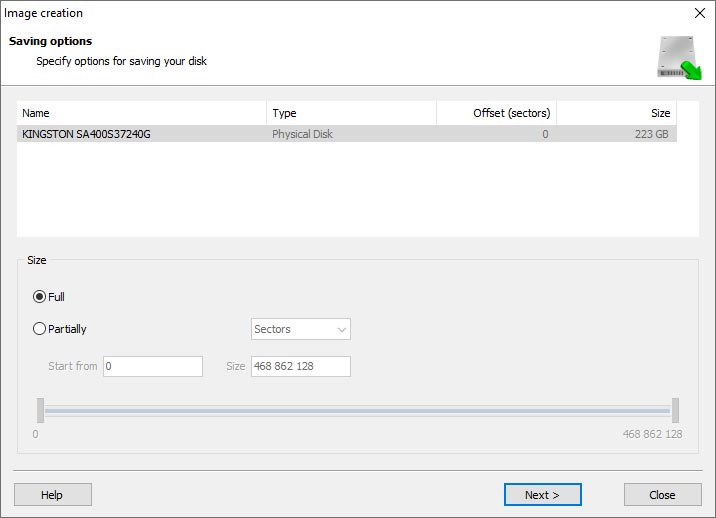
    Hetman RAID Recovery: Image Creation Wizard
  4. Choose the directory where the image will be saved. You may select any available disk connected to your PC or upload the image via FTP.
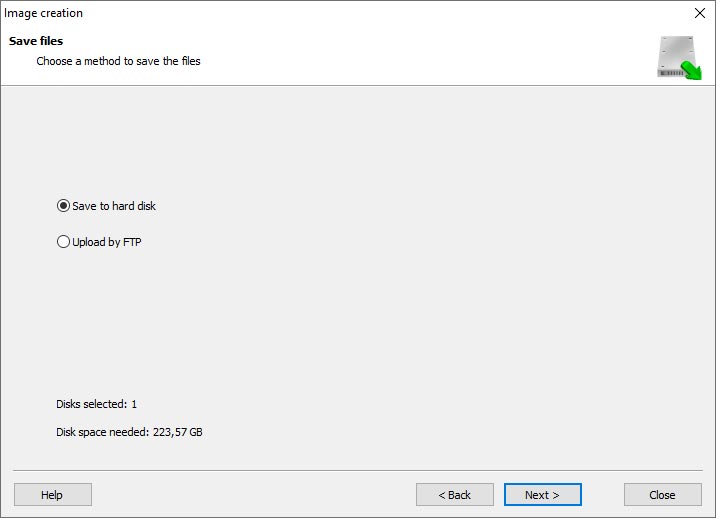
    Hetman RAID Recovery: Choose a disk or save the image via FTP

Where Are the User’s Files Actually Stored?

The QNAP VS-5012 network-attached storage keeps QTS (QuTS hero) operating system files on a separate RAID 1 (mirrored) array. Usually, all NAS systems create several volumes on every hard disk, and the first of them takes up to 2 Gb of space. This is where operating system files are stored. Other volumes are united into a RAID array where user’s data is written.

RAID Recovery Software: Detailed Comparison

Product Operating system RAID controller support Supported file systems Virtual RAID controller support Data recovery from damaged RAID File preview
Hetman RAID Recovery Windows, Linux, MacOS Yes, over 100 controllers FAT, exFAT, NTFS, ReFS, APFS, HFS+, Ext4, Ext3, Ext2, ReiserFS, Btrfs, VMFS, Hikvision, XFS, UFS, ZFS Yes Yes Yes
DiskInternals RAID Recovery Windows Yes, over 10 controllers FAT, NTFS, Ext2/3/4, HFS+ No Yes Yes
R-Studio Windows, Mac, Linux Yes, over 20 controllers FAT, NTFS, Ext2/3/4, HFS+ Yes Yes Yes
UFS Explorer RAID Recovery Windows, Mac, Linux Yes, over 100 controllers FAT, NTFS, Ext2/3/4, HFS+ Yes Yes Yes
EaseUS Data Recovery Windows Yes, over 20 controllers FAT, NTFS, Ext2/3/4, HFS+ No Yes Yes
ReclaiMe Free RAID Recovery Windows Yes, over 100 controllers FAT, NTFS, Ext2/3/4, HFS+ Yes Yes Yes

Feedback

We will be happy to answer your questions!

Comments (3)

  • Hetman Software: Data Recovery
    Hetman Software: Data Recovery 9.08.2022 12:31 #
    If you want to ask a question about data recovery, from NAS VS-5012, feel free to leave a comment!
  • Wilbur Hoole
    Wilbur Hoole 17.09.2023 13:46 #
    Are there any specific hardware requirements for data recovery from a NAS QNAP VS-5012 device?
    • Hetman Software
      Hetman Software 17.09.2023 14:59 #

      There are no specific hardware requirements for data recovery from a NAS QNAP VS-5012 device. However, it is recommended to have a computer with sufficient storage space to store the recovered data. Additionally, a stable internet connection may be required if you need to download any recovery software or tools.

Post comment
User
Your email address will not be published. Required fields are marked *

Vladimir Artiukh

Author: Vladimir Artiukh, Technical Writer

Vladimir Artiukh is a technical writer for Hetman Software, as well as the voice and face of their English-speaking YouTube channel, Hetman Software: Data Recovery for Windows. He handles tutorials, how-tos, and detailed reviews on how the company’s tools work with all kinds of data storage devices.

Oleg Afonin

Editor: Oleg Afonin, Technical Writer

Oleg Afonin is an expert in mobile forensics, data recovery and computer systems. He often attends large data security conferences, and writes several blogs for such resources as xaker.ru, Elcomsoft and Habr. In addition to his online activities, Oleg’s articles are also published in professional magazines. Also, Oleg Afonin is the co-author of a well-known book, Mobile Forensics - Advanced Investigative Strategies.

Share

Questions and answers

  • What are the key features and specifications of the NAS QNAP VS-5012 that make it suitable for use as a media center?

    The NAS QNAP VS-5012 has several key features and specifications that make it suitable for use as a media center:

    1. High-performance hardware: It is powered by an Intel Xeon D-2123IT quad-core processor and supports up to 128GB of DDR4 ECC memory. This ensures smooth and efficient media streaming and transcoding.
    2. Multiple storage options: The NAS supports up to 12 hot-swappable 3.5-inch SATA hard drives, providing ample storage capacity for media files. It also has two M.2 NVMe SSD slots for caching to enhance overall system performance.
    3. 10GbE connectivity: The VS-5012 comes with two 10GbE SFP+ ports, allowing for high-speed data transfer and smooth streaming of 4K media files.
    4. HDMI output: It features an HDMI 2.0 output, enabling direct connection to a TV or monitor for media playback without the need for an additional media player.
    5. Virtualization support: With virtualization technologies such as Virtualization Station and Container Station, the NAS can run multiple virtual machines or containers to provide a dedicated media server environment.
    6. QTS operating system: The NAS runs on QTS, QNAP's intuitive and user-friendly operating system. It offers a wide range of multimedia applications, including the QTS media center, Plex Media Server, and more, for easy management and streaming of media files.
    7. Expandability: The VS-5012 supports expansion units, allowing for additional storage capacity when needed. It also has multiple USB 3.2 Gen 2 ports for connecting external devices such as USB drives, printers, or input devices.

    Overall, the NAS QNAP VS-5012's powerful hardware, high-speed connectivity, storage options, and multimedia features make it an excellent choice for use as a media center, providing a seamless and enjoyable media streaming experience.

  • Can the NAS QNAP VS-5012 support popular media formats and streaming services, such as 4K video playback and Netflix?

    Yes, the QNAP VS-5012 NAS can support popular media formats and streaming services, including 4K video playback and Netflix. The NAS is equipped with a powerful processor and hardware acceleration capabilities that enable smooth playback of high-resolution videos. It also supports various media formats and codecs, ensuring compatibility with a wide range of media files. Additionally, the QNAP NAS has apps and plugins available, including the Netflix app, which allows you to stream content from Netflix directly on your NAS device.

  • Are there any limitations or considerations to keep in mind when using the NAS QNAP VS-5012 as a media center, such as storage capacity, connectivity options, or software compatibility?

    When using the QNAP VS-5012 as a media center, there are a few limitations and considerations to keep in mind:

    1. Storage Capacity: The QNAP VS-5012 comes with a pre-installed storage capacity, but it can be expanded by adding additional hard drives or connecting external storage devices. However, the maximum storage capacity will depend on the number and size of the hard drives you install.
    2. Connectivity Options: The QNAP VS-5012 offers various connectivity options, including HDMI, USB, and network ports. However, it's important to ensure that the connectivity options meet your requirements. For example, if you plan to connect multiple devices simultaneously, make sure the NAS has enough USB or HDMI ports.
    3. Software Compatibility: The QNAP VS-5012 runs on QNAP's operating system called QTS. While QTS is compatible with various media center applications, it's essential to check the compatibility of specific software or media center applications you intend to use. Ensure that the software you want to install is supported by QTS.
    4. Processing Power: The QNAP VS-5012 comes with an Intel Core i3 processor, which should be sufficient for most media center tasks. However, if you plan to use demanding applications or perform resource-intensive tasks, you may need to consider a NAS with a more powerful processor.
    5. User Interface: The user interface of the QNAP VS-5012 may take some time to get used to, especially if you are not familiar with NAS systems. It's recommended to explore and understand the user interface before setting up the media center to ensure a smooth experience.
    6. Cooling and Noise: The QNAP VS-5012 may generate some heat and noise, especially if it's running resource-intensive tasks. Ensure that you have proper ventilation and consider the noise levels if you plan to place the NAS in a living room or bedroom.

    Overall, the QNAP VS-5012 is a versatile NAS that can function as a media center, but it's important to consider factors such as storage capacity, connectivity options, software compatibility, processing power, user interface, and cooling/noise levels to ensure it meets your specific requirements.