Recovering Data from NAS Synology DiskStation DS509+ RAID Arrays: Coping with Component Wear

Has your NAS Synology DiskStation DS509+ suddenly lost its network drive and you’re unsure what to do next? Did the RAID array collapse, making your files inaccessible? Is the device throwing errors during startup? Perhaps you accidentally rebuilt the RAID array or several hard drives failed at the same time?

Recovering Data from NAS Synology DiskStation DS509+ RAID Arrays: Coping with Component Wear

Synology DiskStation DS509+ NAS Data Recovery in 2025

In this step-by-step tutorial, we’ll show you how to rebuild your RAID and recover data from an DiskStation DS509+. We’ll walk through the most common causes of failure and demonstrate proven methods to restore files from a lost or degraded RAID array.

Recovering Data from NAS Synology DiskStation DS509+ RAID Arrays: Coping with Component Wear

RAID Recovery™ 2.8
Recover data from damaged RAID arrays inaccessible from a computer.
Download

Why Regular Data Recovery Tools Can’t Restore Files from RAID

Conventional hard drives store user data by writing it sequentially across the disk surface, which means an entire file is typically located on a single drive. In contrast, when data is written to a RAID array, each file is split into multiple fragments. These fragments are then distributed and written in sequence across all the drives in the array. Depending on the configuration, fragment sizes can range from 2 KB to 2 MB, so every file is physically stored across several disks at once.

This approach significantly increases read and write performance — after all, writing two halves of a 1 GB file to two drives simultaneously is much faster than writing the full 1 GB to a single disk. However, this same mechanism makes file recovery far more complex.

Different RAID levels use different methods to distribute and protect data. On top of that, manufacturers like Synology often add their own proprietary structures and variations. As a result, data can be written to disks in many different formats, and each requires a specific approach during recovery.

Are there any known limitations or performance issues related to specific RAID levels in NAS Synology DiskStation DS509+ devices?

Yes, there are some known limitations and performance issues related to specific RAID levels in the Synology DiskStation DS509+ NAS devices.

  1. RAID 5 and RAID 6: These RAID levels offer data redundancy by distributing parity across multiple drives. However, they have a higher write penalty compared to RAID 0 or RAID 1. As a result, write performance may be lower, especially for small random writes. Additionally, when a drive fails in RAID 5 or RAID 6, the system needs to recalculate the parity, which can put a strain on the performance during the rebuild process.
  2. RAID 10: This RAID level combines mirroring and striping, offering both performance and redundancy. However, it requires a higher number of drives compared to other RAID levels. The performance of RAID 10 can be excellent for both read and write operations, but the usable capacity is limited to half of the total drive capacity due to mirroring.
  3. SHR (Synology Hybrid RAID): This proprietary RAID implementation by Synology allows for mixed drive sizes and offers flexibility in expanding the storage pool. However, it may have slightly lower performance compared to traditional RAID levels due to the additional overhead of managing different drive sizes.
  4. RAID Expansion and Migration: When expanding or migrating RAID volumes on a Synology DiskStation DS509+, the process can take a significant amount of time, especially for larger drives or volumes. During this process, the system may experience reduced performance.

It's important to note that the performance limitations and issues can vary depending on the specific hardware configuration, drive types, network environment, and workload characteristics. It is recommended to consult the official documentation or contact Synology support for detailed information specific to your DS509+ model.

How to Remove Hard Disks from Your NAS and Connect Them to a PC

Although the NAS DiskStation DS509+ can be accessed over the network, you still need to remove its hard disks and connect them directly to a Windows PC. Only then can the recovery software properly scan and analyze the drives. Follow these steps:

  1. Power off the NAS and disconnect it from the power source.

    WARNING! Before removing any drives, carefully read the device manual. Improper actions may damage both the NAS enclosure and the hard disks in the RAID array.

  2. Remove the hard disks one by one, gently sliding each drive out of its slot. Remember that hard disks are highly sensitive: any impact or drop can cause serious physical damage.

  3. Label each hard disk according to its position inside the NAS. The order of the drives is crucial for correct RAID reconstruction.

  4. Connect the drives to your computer. In this video, we explain which ports you can use to connect hard disks and what to do if your PC does not have enough free connectors.

    Go to view

    How to Order Remote Data Recovery

    How to Order Remote Data Recovery

Step-by-Step Data Recovery with Hetman RAID Recovery

Hetman Raid Recovery

This program restores data from damaged RAID arrays and is fully compatible with Synology DiskStation DS509+. Each hard disk in the array contains technical metadata describing how files were written. When launched, Hetman RAID Recovery analyzes this metadata, automatically reconstructs the damaged array, and provides access to its contents. After that, you can browse the recovered disk and save your files. The program can also restore files that were accidentally deleted from the network drive.

Go to view
How to recover data from a Synology

How to recover data from a Synology

DiskStation DS509+ has 5 HDD slots, and it supports the following array types:

  • Synology Hybrid RAID (SHR);
  • RAID 6;
  • RAID 5;
  • RAID 10;
  • RAID 1;
  • RAID 0;
  • Basic;
  • JBOD;

NAS supports:

  • Btrfs;
  • EXT4;
  • EXT3 (External Disk Only);
  • FAT32 (External Disk Only);
  • exFAT (External Disk Only);
  • NTFS (External Disk Only);
  • HFS+ (External Disk Read Only);

How to Safely Recover Data from Disk Images

This utility allows you to create a complete copy of a disk and work with the disk image instead of the physical drive. This approach helps protect your data from:

  • Overwriting during the recovery process;
  • Additional data loss caused by bad sectors;
  • User errors.

To create a disk image, follow these steps:

  1. Ensure you have enough free space to store the image. Its size will typically match the size of the original disk.

  2. In the main window, select the target disk and choose Tools - Save Disk. You can also select multiple disks if needed.

  3. When the Image Creation Wizard opens, select whether you want to save the entire disk or only a specific region. Adjust the settings and click Next.
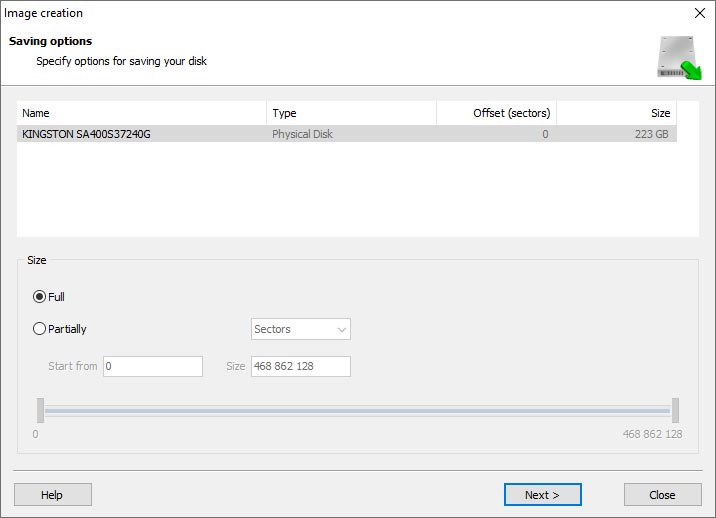
    Hetman RAID Recovery: Image Creation Wizard
  4. Choose the directory where the image will be saved. You may select any available disk connected to your PC or upload the image via FTP.
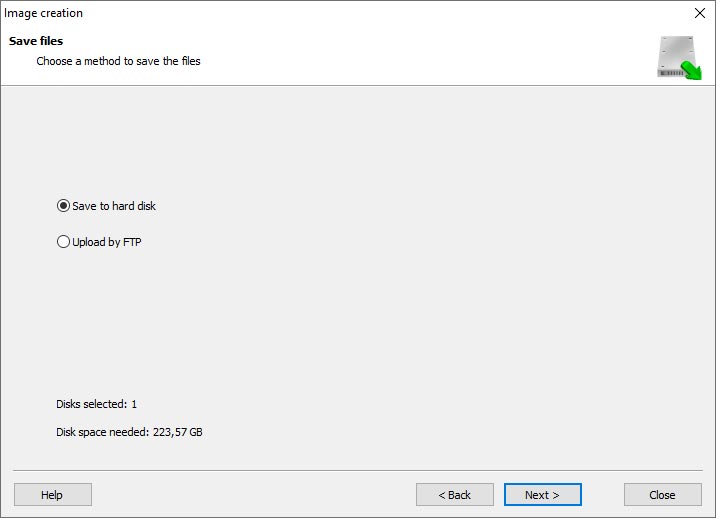
    Hetman RAID Recovery: Choose a disk or save the image via FTP

Where Are the User’s Files Actually Stored?

The Synology DiskStation DS509+ network-attached storage keeps DSM (DiskStation Manager) operating system files on a separate RAID 1 (mirrored) array. Usually, all NAS systems create several volumes on every hard disk, and the first of them takes up to 2 Gb of space. This is where operating system files are stored. Other volumes are united into a RAID array where user’s data is written.

RAID Recovery Software: Detailed Comparison

Product Operating system RAID controller support Supported file systems Virtual RAID controller support Data recovery from damaged RAID File preview
Hetman RAID Recovery Windows, Linux, MacOS Yes, over 100 controllers FAT, exFAT, NTFS, ReFS, APFS, HFS+, Ext4, Ext3, Ext2, ReiserFS, Btrfs, VMFS, Hikvision, XFS, UFS, ZFS Yes Yes Yes
DiskInternals RAID Recovery Windows Yes, over 10 controllers FAT, NTFS, Ext2/3/4, HFS+ No Yes Yes
R-Studio Windows, Mac, Linux Yes, over 20 controllers FAT, NTFS, Ext2/3/4, HFS+ Yes Yes Yes
UFS Explorer RAID Recovery Windows, Mac, Linux Yes, over 100 controllers FAT, NTFS, Ext2/3/4, HFS+ Yes Yes Yes
EaseUS Data Recovery Windows Yes, over 20 controllers FAT, NTFS, Ext2/3/4, HFS+ No Yes Yes
ReclaiMe Free RAID Recovery Windows Yes, over 100 controllers FAT, NTFS, Ext2/3/4, HFS+ Yes Yes Yes

Feedback

We will be happy to answer your questions!

Comments (1)

  • Hetman Software: Data Recovery
    Hetman Software: Data Recovery 9.08.2022 12:31 #
    If you want to ask a question about data recovery, from NAS DiskStation DS509+, feel free to leave a comment!
Post comment
User
Your email address will not be published. Required fields are marked *

Vladimir Artiukh

Author: Vladimir Artiukh, Technical Writer

Vladimir Artiukh is a technical writer for Hetman Software, as well as the voice and face of their English-speaking YouTube channel, Hetman Software: Data Recovery for Windows. He handles tutorials, how-tos, and detailed reviews on how the company’s tools work with all kinds of data storage devices.

Oleg Afonin

Editor: Oleg Afonin, Technical Writer

Oleg Afonin is an expert in mobile forensics, data recovery and computer systems. He often attends large data security conferences, and writes several blogs for such resources as xaker.ru, Elcomsoft and Habr. In addition to his online activities, Oleg’s articles are also published in professional magazines. Also, Oleg Afonin is the co-author of a well-known book, Mobile Forensics - Advanced Investigative Strategies.

Share

Questions and answers

  • What are the advantages of using a NAS Synology DiskStation DS509+ over regular external hard drives in terms of data accessibility and sharing?

    There are several advantages of using a NAS Synology DiskStation DS509+ over regular external hard drives in terms of data accessibility and sharing:

    1. Centralized storage: A NAS DiskStation allows you to consolidate all your data in one central location. This makes it easier to manage and access your files from any device connected to the network.
    2. Network accessibility: Unlike external hard drives that need to be physically connected to a computer, a NAS DiskStation is connected to your network. This means that any device connected to the same network can access the files stored on the NAS, including computers, smartphones, tablets, and smart TVs.
    3. User management and permissions: NAS DiskStations come with user management features, allowing you to create multiple user accounts with different access permissions. This means you can control who can access and modify specific files or folders on the NAS, enhancing data security and privacy.
    4. File sharing and collaboration: With a NAS DiskStation, you can easily share files and folders with others, both within your local network and remotely over the internet. This makes collaboration on projects or sharing files with friends and family much more convenient.
    5. Data redundancy and backup: Many NAS DiskStations support RAID configurations, which provide data redundancy and protection against drive failures. This means that even if one drive fails, your data remains accessible and can be recovered. Additionally, NAS DiskStations often have built-in backup features, allowing you to schedule automatic backups of your important data.
    6. Expandable storage: NAS DiskStations typically have multiple drive bays, allowing you to start with a few drives and expand the storage capacity as needed. This flexibility makes it easy to accommodate growing data storage requirements.
    7. Additional features and applications: NAS DiskStations often come with a wide range of additional features and applications. These can include media servers for streaming content to devices like TVs and game consoles, surveillance station for video surveillance management, cloud synchronization for easy access to your files from anywhere, and more.

    Overall, a NAS Synology DiskStation DS509+ offers greater convenience, flexibility, and functionality compared to regular external hard drives, making it an ideal choice for data accessibility and sharing in a networked environment.

  • How does the NAS Synology DiskStation DS509+ offer better data protection and redundancy compared to regular external hard drives?

    The NAS Synology DiskStation DS509+ offers better data protection and redundancy compared to regular external hard drives in several ways:

    1. RAID Support: The DS509+ supports various RAID levels, including RAID 0, 1, 5, 6, and 10. RAID (Redundant Array of Independent Disks) allows multiple hard drives to work together, providing data redundancy and protection against drive failures. In case of a drive failure, the DS509+ can rebuild the data from the remaining drives without any data loss.
    2. Hot-swappable Drive Bays: The DS509+ has hot-swappable drive bays, which means you can replace a failed drive without shutting down the system. This feature ensures minimal downtime and uninterrupted access to your data.
    3. Multiple Drive Support: The DS509+ supports up to five hard drives, allowing for larger storage capacity compared to regular external hard drives. This enables you to store more data and provides the option to expand storage as your needs grow.
    4. Data Backup and Synchronization: The DS509+ offers various backup and synchronization options, including scheduled backups, incremental backups, and cloud backup services. You can easily create backups of your important data to ensure its safety and recoverability in case of any data loss or disaster.
    5. Network Accessibility: Unlike regular external hard drives, which are typically connected to a single computer, the DS509+ is a network-attached storage device. It can be accessed by multiple users simultaneously over a network, providing centralized storage and easy file sharing across different devices and platforms.
    6. Data Encryption and Permissions: The DS509+ offers advanced security features such as data encryption and user permissions. You can encrypt your data to protect it from unauthorized access and set up different user accounts with specific access rights to ensure data privacy and control.

    Overall, the NAS Synology DiskStation DS509+ provides a comprehensive and robust data protection solution with its RAID support, hot-swappable drive bays, backup options, network accessibility, and advanced security features. It offers better data redundancy, storage capacity, and data accessibility compared to regular external hard drives.

  • In what ways does the NAS Synology DiskStation DS509+ enhance data management and organization compared to traditional external hard drives?

    The NAS Synology DiskStation DS509+ offers several advantages over traditional external hard drives when it comes to data management and organization:

    1. Centralized storage: The DS509+ acts as a centralized storage solution, allowing multiple users to access and share files from a single location. This eliminates the need for individual external hard drives and simplifies data management.
    2. Advanced file sharing capabilities: The DS509+ supports various file sharing protocols such as SMB, AFP, FTP, and WebDAV. This enables seamless file sharing across different platforms and devices, enhancing collaboration and productivity.
    3. User and group management: The DiskStation allows administrators to create user accounts and assign access rights to specific folders or files. This ensures data security and enables efficient management of user permissions.
    4. RAID support: The DS509+ supports various RAID configurations, including RAID 0, 1, 5, 6, and 10. This provides data redundancy and protection against drive failures, ensuring data integrity and minimizing the risk of data loss.
    5. Data backup and synchronization: Synology DiskStation offers robust backup features, including scheduled backups, incremental backups, and versioning. It also supports cloud backup services, allowing users to create off-site backups for added data protection. Additionally, the DS509+ supports real-time synchronization with other devices, ensuring that data remains up-to-date across multiple platforms.
    6. Advanced data management features: The DiskStation comes with a range of data management features, such as file indexing, search, and metadata support. These features make it easier to locate and organize files, enhancing overall data management efficiency.
    7. Expandability and scalability: Unlike traditional external hard drives, the DS509+ offers expandable storage options. It supports additional hard drives and can be easily upgraded to accommodate growing storage needs. This scalability makes it a more flexible and future-proof solution.

    Overall, the NAS Synology DiskStation DS509+ provides a comprehensive and feature-rich data management solution compared to traditional external hard drives. It offers centralized storage, advanced file sharing capabilities, data backup and synchronization, and various management features, making it an ideal choice for individuals and businesses requiring efficient data organization and management.