How to Extract Data from a RAID Disk When NAS TerraMaster U16-322-9100 Does Not Turn On

Has your NAS TerraMaster U16-322-9100 suddenly lost its network drive and you’re unsure what to do next? Did the RAID array collapse, making your files inaccessible? Is the device throwing errors during startup? Perhaps you accidentally rebuilt the RAID array or several hard drives failed at the same time?

How to Extract Data from a RAID Disk When NAS TerraMaster U16-322-9100 Does Not Turn On

TerraMaster U16-322-9100 NAS Data Recovery in 2025

In this step-by-step tutorial, we’ll show you how to rebuild your RAID and recover data from an U16-322-9100. We’ll walk through the most common causes of failure and demonstrate proven methods to restore files from a lost or degraded RAID array.

How to Extract Data from a RAID Disk When NAS TerraMaster U16-322-9100 Does Not Turn On

RAID Recovery™ 2.8
Recover data from damaged RAID arrays inaccessible from a computer.
Download

Why Regular Data Recovery Tools Can’t Restore Files from RAID

Conventional hard drives store user data by writing it sequentially across the disk surface, which means an entire file is typically located on a single drive. In contrast, when data is written to a RAID array, each file is split into multiple fragments. These fragments are then distributed and written in sequence across all the drives in the array. Depending on the configuration, fragment sizes can range from 2 KB to 2 MB, so every file is physically stored across several disks at once.

This approach significantly increases read and write performance — after all, writing two halves of a 1 GB file to two drives simultaneously is much faster than writing the full 1 GB to a single disk. However, this same mechanism makes file recovery far more complex.

Different RAID levels use different methods to distribute and protect data. On top of that, manufacturers like TerraMaster often add their own proprietary structures and variations. As a result, data can be written to disks in many different formats, and each requires a specific approach during recovery.

How can data fragmentation impact the read and write speeds, and potential data loss on NAS TerraMaster U16-322-9100 devices?

Data fragmentation can have several impacts on read and write speeds, as well as potential data loss, on NAS TerraMaster U16-322-9100 devices:

  1. Read and Write Speeds: Data fragmentation refers to the scattering of data across different physical locations on a storage device. When data is fragmented, the NAS device needs to access multiple locations to retrieve or write the complete file, resulting in increased seek time and reduced performance. This can slow down read and write speeds significantly, leading to longer access times and decreased overall system performance.
  2. Disk Fragmentation: Data fragmentation can also lead to disk fragmentation, where the physical blocks of a file are scattered across different areas of the hard drive. This can cause additional delays in read and write operations as the drive heads need to move more frequently to access the scattered data blocks, resulting in slower performance.
  3. Data Loss: Fragmentation can increase the risk of data loss on NAS devices. If a file is fragmented and the file system metadata gets corrupted or lost, it becomes challenging for the NAS device to locate and retrieve all the scattered data blocks. This can result in data loss or corruption, making it difficult or impossible to recover the complete file.

To mitigate the impact of data fragmentation on NAS TerraMaster U16-322-9100 devices, the following steps can be taken:

  1. Regular Defragmentation: Perform regular defragmentation of the storage drives on the NAS device. This process rearranges the scattered data blocks, optimizing their placement on the disk and reducing fragmentation. Defragmentation can help improve read and write speeds by minimizing seek time and enhancing overall system performance.
  2. File System Optimization: Ensure that the file system used on the NAS device supports efficient handling of large files and minimizes fragmentation. File systems like NTFS or ext4 have built-in mechanisms to reduce fragmentation and improve performance. Choose an appropriate file system for your NAS device that aligns with your specific requirements.
  3. Proper Storage Management: Avoid filling up the storage drives to their maximum capacity, as this can increase the likelihood of fragmentation. Leaving some free space on the drives allows the NAS device to allocate contiguous blocks for new files, reducing fragmentation.
  4. Regular Backup: To mitigate the risk of data loss due to fragmentation or other issues, it is crucial to maintain regular backups of important data stored on the NAS device. This ensures that even if data loss occurs, you can restore the files from a backup source.

By implementing these practices, you can minimize the impact of data fragmentation on read and write speeds and reduce the risk of potential data loss on NAS TerraMaster U16-322-9100 devices.

How to Remove Hard Disks from Your NAS and Connect Them to a PC

Although the NAS U16-322-9100 can be accessed over the network, you still need to remove its hard disks and connect them directly to a Windows PC. Only then can the recovery software properly scan and analyze the drives. Follow these steps:

  1. Power off the NAS and disconnect it from the power source.

    WARNING! Before removing any drives, carefully read the device manual. Improper actions may damage both the NAS enclosure and the hard disks in the RAID array.

  2. Remove the hard disks one by one, gently sliding each drive out of its slot. Remember that hard disks are highly sensitive: any impact or drop can cause serious physical damage.

  3. Label each hard disk according to its position inside the NAS. The order of the drives is crucial for correct RAID reconstruction.

  4. Connect the drives to your computer. In this video, we explain which ports you can use to connect hard disks and what to do if your PC does not have enough free connectors.

    Go to view

    How to Order Remote Data Recovery

    How to Order Remote Data Recovery

Step-by-Step Data Recovery with Hetman RAID Recovery

Hetman Raid Recovery

This program restores data from damaged RAID arrays and is fully compatible with TerraMaster U16-322-9100. Each hard disk in the array contains technical metadata describing how files were written. When launched, Hetman RAID Recovery analyzes this metadata, automatically reconstructs the damaged array, and provides access to its contents. After that, you can browse the recovered disk and save your files. The program can also restore files that were accidentally deleted from the network drive.

Go to view
How to recover data from a TerraMaster

How to recover data from a TerraMaster

U16-322-9100 has 16 HDD slots, and it supports the following array types:

  • RAID 0;
  • RAID 1;
  • RAID 5;
  • RAID 6;
  • RAID 50;
  • RAID 60;
  • JBOD;

NAS supports:

  • Ext2;
  • Ext3;
  • Ext4;
  • Btrfs;

How to Safely Recover Data from Disk Images

This utility allows you to create a complete copy of a disk and work with the disk image instead of the physical drive. This approach helps protect your data from:

  • Overwriting during the recovery process;
  • Additional data loss caused by bad sectors;
  • User errors.

To create a disk image, follow these steps:

  1. Ensure you have enough free space to store the image. Its size will typically match the size of the original disk.

  2. In the main window, select the target disk and choose Tools - Save Disk. You can also select multiple disks if needed.

  3. When the Image Creation Wizard opens, select whether you want to save the entire disk or only a specific region. Adjust the settings and click Next.
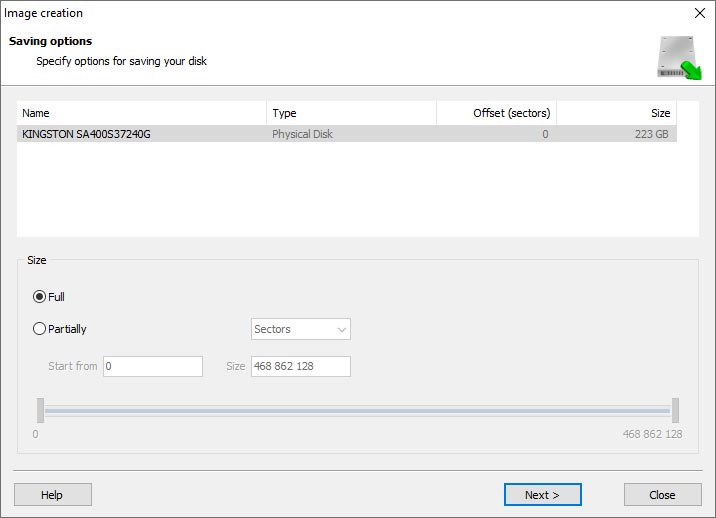
    Hetman RAID Recovery: Image Creation Wizard
  4. Choose the directory where the image will be saved. You may select any available disk connected to your PC or upload the image via FTP.
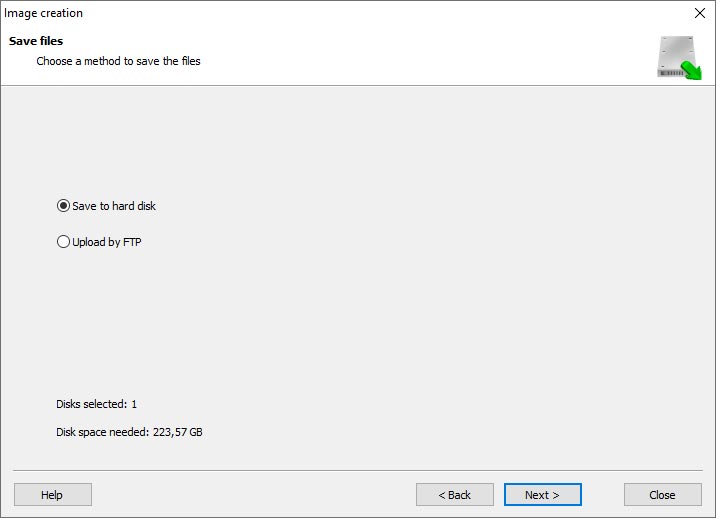
    Hetman RAID Recovery: Choose a disk or save the image via FTP

Where Are the User’s Files Actually Stored?

The TerraMaster U16-322-9100 network-attached storage keeps OS Linux operating system files on a separate RAID 1 (mirrored) array. Usually, all NAS systems create several volumes on every hard disk, and the first of them takes up to 2 Gb of space. This is where operating system files are stored. Other volumes are united into a RAID array where user’s data is written.

RAID Recovery Software: Detailed Comparison

Product Operating system RAID controller support Supported file systems Virtual RAID controller support Data recovery from damaged RAID File preview
Hetman RAID Recovery Windows, Linux, MacOS Yes, over 100 controllers FAT, exFAT, NTFS, ReFS, APFS, HFS+, Ext4, Ext3, Ext2, ReiserFS, Btrfs, VMFS, Hikvision, XFS, UFS, ZFS Yes Yes Yes
DiskInternals RAID Recovery Windows Yes, over 10 controllers FAT, NTFS, Ext2/3/4, HFS+ No Yes Yes
R-Studio Windows, Mac, Linux Yes, over 20 controllers FAT, NTFS, Ext2/3/4, HFS+ Yes Yes Yes
UFS Explorer RAID Recovery Windows, Mac, Linux Yes, over 100 controllers FAT, NTFS, Ext2/3/4, HFS+ Yes Yes Yes
EaseUS Data Recovery Windows Yes, over 20 controllers FAT, NTFS, Ext2/3/4, HFS+ No Yes Yes
ReclaiMe Free RAID Recovery Windows Yes, over 100 controllers FAT, NTFS, Ext2/3/4, HFS+ Yes Yes Yes

Feedback

We will be happy to answer your questions!

Comments (3)

  • Hetman Software: Data Recovery
    Hetman Software: Data Recovery 9.08.2022 12:31 #
    If you want to ask a question about data recovery, from NAS U16-322-9100, feel free to leave a comment!
  • Clinton Benson
    Clinton Benson 10.09.2023 04:41 #
    Are there any specific data structures used in NAS TerraMaster U16-322-9100 devices that may affect data recovery?
    • Hetman Software
      Hetman Software 10.09.2023 06:00 #

      Based on the available information, the specific data structures used in NAS TerraMaster U16-322-9100 devices are not explicitly mentioned. However, NAS devices typically utilize various data structures such as file systems (e.g., NTFS, FAT32, ext4) and RAID configurations (e.g., RAID 0, RAID 1, RAID 5) to organize and manage data.

      These data structures can have an impact on data recovery in the following ways:

      1. File System Structure: The file system used in the NAS device determines how data is organized, stored, and accessed. Different file systems may have varying levels of support for data recovery tools and techniques. For example, some file systems may have built-in features for data recovery, while others may require specialized tools or services.
      2. RAID Configuration: Many NAS devices employ RAID technology to provide data redundancy and improve performance. The specific RAID configuration used (e.g., RAID 1 mirroring, RAID 5 striping with parity) affects how data is distributed and stored across multiple drives. In case of drive failure, data recovery may require knowledge of the RAID configuration and appropriate techniques to rebuild the array.
      3. Metadata and Indexing: NAS devices often maintain metadata and indexing structures to track file attributes, directory structures, and file locations. These structures can play a crucial role in data recovery, as they provide information about the organization and location of files on the storage system.

      In summary, the data structures used in NAS TerraMaster U16-322-9100 devices, including the file system, RAID configuration, and metadata/indexing structures, can impact the process of data recovery. It is recommended to consult the device's documentation or contact the manufacturer for specific details on data recovery procedures and supported tools.

Post comment
User
Your email address will not be published. Required fields are marked *

Vladimir Artiukh

Author: Vladimir Artiukh, Technical Writer

Vladimir Artiukh is a technical writer for Hetman Software, as well as the voice and face of their English-speaking YouTube channel, Hetman Software: Data Recovery for Windows. He handles tutorials, how-tos, and detailed reviews on how the company’s tools work with all kinds of data storage devices.

Oleg Afonin

Editor: Oleg Afonin, Technical Writer

Oleg Afonin is an expert in mobile forensics, data recovery and computer systems. He often attends large data security conferences, and writes several blogs for such resources as xaker.ru, Elcomsoft and Habr. In addition to his online activities, Oleg’s articles are also published in professional magazines. Also, Oleg Afonin is the co-author of a well-known book, Mobile Forensics - Advanced Investigative Strategies.

Share

Questions and answers

  • How does RAID technology enhance the performance and data protection capabilities of the NAS TerraMaster U16-322-9100?

    RAID (Redundant Array of Independent Disks) technology enhances the performance and data protection capabilities of the NAS TerraMaster U16-322-9100 in the following ways:

    1. Improved Performance: RAID technology allows multiple hard drives to work together as a single logical unit, thereby increasing the overall performance of the NAS. The U16-322-9100 supports various RAID levels such as RAID 0, RAID 1, RAID 5, RAID 6, RAID 10, and JBOD, each offering different performance characteristics.
    • RAID 0: Data is striped across multiple drives, resulting in improved read/write speeds. It is ideal for applications that require high performance but don't prioritize data redundancy.
    • RAID 1: Data is mirrored across multiple drives, providing redundancy and improved read performance. If one drive fails, the data can be recovered from the mirrored drive.
    • RAID 5: Data is striped across multiple drives with distributed parity, offering both performance and data redundancy. If one drive fails, data can be rebuilt using the parity information.
    • RAID 6: Similar to RAID 5 but with double distributed parity, allowing for the simultaneous failure of two drives without data loss.
    • RAID 10: Combines mirroring and striping, offering both performance and redundancy. Data is mirrored across pairs of drives and then striped across those pairs.
    • JBOD: Just a Bunch of Disks, where each drive is treated as an individual volume, providing maximum storage capacity without any redundancy or performance improvements.
    1. Data Protection: RAID technology ensures data protection by providing redundancy and fault tolerance. In RAID levels like RAID 1, RAID 5, RAID 6, and RAID 10, if a drive fails, the NAS can continue to function without data loss or downtime. The failed drive can be replaced, and the data can be rebuilt or recovered from the remaining drives.
    2. Hot-Swapping: The NAS TerraMaster U16-322-9100 supports hot-swapping, allowing you to replace a failed drive without shutting down the system. This feature ensures continuous operation and minimizes downtime.
    3. Scalability: RAID technology enables easy scalability by allowing additional drives to be added to the NAS. Depending on the RAID level, the NAS can expand its storage capacity without losing data or disrupting operations.

    Overall, RAID technology enhances the performance and data protection capabilities of the NAS TerraMaster U16-322-9100 by improving read/write speeds, providing data redundancy, fault tolerance, hot-swapping, and scalability options.

  • What RAID levels are supported by the NAS TerraMaster U16-322-9100, and how do they affect the storage capacity and fault tolerance?

    The NAS TerraMaster U16-322-9100 supports the following RAID levels:

    1. RAID 0: This level offers striping without parity or mirroring. It combines multiple drives into a single logical unit and provides increased performance and storage capacity. However, it does not provide fault tolerance, meaning if one drive fails, all data is lost.
    2. RAID 1: This level involves mirroring, where data is duplicated across multiple drives. It provides high fault tolerance as data is still accessible even if one drive fails. However, it reduces the storage capacity by half since all data is duplicated.
    3. RAID 5: This level offers striping with distributed parity. It requires at least three drives and provides both performance and fault tolerance. Data and parity information are distributed across drives, allowing for recovery if one drive fails. It offers a good balance between storage capacity and fault tolerance.
    4. RAID 6: This level is similar to RAID 5 but with double distributed parity. It requires at least four drives and provides higher fault tolerance compared to RAID 5. It can withstand the failure of two drives without data loss. However, it reduces the storage capacity further due to the additional parity information.
    5. RAID 10: This level combines mirroring and striping. It requires at least four drives and provides high fault tolerance and performance. Data is mirrored across drives and then striped. It offers good fault tolerance and performance but reduces the storage capacity by half.

    The choice of RAID level affects the storage capacity and fault tolerance. RAID 0 provides the highest storage capacity but no fault tolerance. RAID 1, RAID 5, RAID 6, and RAID 10 offer varying degrees of fault tolerance, with a reduction in storage capacity. The specific impact on storage capacity and fault tolerance depends on the number and size of drives used in the NAS.

  • Can the NAS TerraMaster U16-322-9100 be configured with different RAID levels simultaneously, and if so, how does this impact data organization and accessibility?

    No, the NAS TerraMaster U16-322-9100 cannot be configured with different RAID levels simultaneously. The U16-322-9100 is a 16-bay NAS device that supports different RAID levels such as RAID 0, RAID 1, RAID 5, RAID 6, RAID 10, and JBOD. However, you can only configure the entire NAS with a single RAID level.

    The RAID level you choose will impact the data organization and accessibility on the NAS. Here's a brief explanation of how different RAID levels affect data:

    1. RAID 0: This level provides striping without any data redundancy. It offers maximum performance and capacity utilization but does not have any fault tolerance. If one drive fails, all data is lost.
    2. RAID 1: This level provides mirroring, where data is duplicated across two drives. It offers data redundancy, so if one drive fails, the data is still accessible from the other drive. However, it reduces the overall capacity by half.
    3. RAID 5: This level uses striping with distributed parity. It requires a minimum of three drives and offers a balance between performance, capacity, and fault tolerance. If one drive fails, the data can be rebuilt using the parity information.
    4. RAID 6: This level is similar to RAID 5 but provides dual distributed parity. It requires a minimum of four drives and offers higher fault tolerance. It can withstand the failure of two drives simultaneously.
    5. RAID 10: This level combines mirroring (RAID 1) and striping (RAID 0). It requires a minimum of four drives and offers both performance and fault tolerance. Data is mirrored across two sets of striped drives.
    6. JBOD (Just a Bunch of Disks): This is not a RAID level but simply presents all the drives as independent volumes. It offers no data redundancy or fault tolerance.

    When choosing a RAID level, consider your priorities for performance, capacity, and fault tolerance. Each RAID level has its advantages and disadvantages, so it's essential to select the one that aligns with your specific needs.