How to Recover Data from NAS Synology Rack Station RS408 / RS408RP RAID Arrays Affected by Component Wear

Has your NAS Synology Rack Station RS408 / RS408RP suddenly lost its network drive and you’re unsure what to do next? Did the RAID array collapse, making your files inaccessible? Is the device throwing errors during startup? Perhaps you accidentally rebuilt the RAID array or several hard drives failed at the same time?

How to Recover Data from NAS Synology Rack Station RS408 / RS408RP RAID Arrays Affected by Component Wear

Synology Rack Station RS408 / RS408RP NAS Data Recovery in 2025

In this step-by-step tutorial, we’ll show you how to rebuild your RAID and recover data from an Rack Station RS408 / RS408RP. We’ll walk through the most common causes of failure and demonstrate proven methods to restore files from a lost or degraded RAID array.

How to Recover Data from NAS Synology Rack Station RS408 / RS408RP RAID Arrays Affected by Component Wear

RAID Recovery™ 2.8
Recover data from damaged RAID arrays inaccessible from a computer.
Download

Why Regular Data Recovery Tools Can’t Restore Files from RAID

Conventional hard drives store user data by writing it sequentially across the disk surface, which means an entire file is typically located on a single drive. In contrast, when data is written to a RAID array, each file is split into multiple fragments. These fragments are then distributed and written in sequence across all the drives in the array. Depending on the configuration, fragment sizes can range from 2 KB to 2 MB, so every file is physically stored across several disks at once.

This approach significantly increases read and write performance — after all, writing two halves of a 1 GB file to two drives simultaneously is much faster than writing the full 1 GB to a single disk. However, this same mechanism makes file recovery far more complex.

Different RAID levels use different methods to distribute and protect data. On top of that, manufacturers like Synology often add their own proprietary structures and variations. As a result, data can be written to disks in many different formats, and each requires a specific approach during recovery.

Can encryption safeguard data stored on NAS Synology Rack Station RS408 / RS408RP devices?

Yes, encryption can safeguard data stored on NAS Synology Rack Station RS408 / RS408RP devices. Synology NAS devices offer various encryption options to protect data at rest.

One of the commonly used encryption methods is AES (Advanced Encryption Standard) 256-bit encryption. This encryption algorithm ensures that data stored on the NAS is securely encrypted and can only be accessed with the correct encryption key.

Synology also provides options for encrypted shared folders, where data stored within these folders is automatically encrypted and decrypted on-the-fly. This means that even if someone gains unauthorized access to the NAS or the hard drives, they won't be able to access the encrypted data without the encryption key.

Additionally, Synology NAS devices support SSL/TLS encryption for secure data transmission over the network. This ensures that data transfer between the NAS and other devices is encrypted, preventing eavesdropping or unauthorized interception of data.

Overall, by enabling encryption on a Synology Rack Station RS408 / RS408RP NAS device, you can significantly enhance the security and protection of your stored data.

How to Remove Hard Disks from Your NAS and Connect Them to a PC

Although the NAS Rack Station RS408 / RS408RP can be accessed over the network, you still need to remove its hard disks and connect them directly to a Windows PC. Only then can the recovery software properly scan and analyze the drives. Follow these steps:

  1. Power off the NAS and disconnect it from the power source.

    WARNING! Before removing any drives, carefully read the device manual. Improper actions may damage both the NAS enclosure and the hard disks in the RAID array.

  2. Remove the hard disks one by one, gently sliding each drive out of its slot. Remember that hard disks are highly sensitive: any impact or drop can cause serious physical damage.

  3. Label each hard disk according to its position inside the NAS. The order of the drives is crucial for correct RAID reconstruction.

  4. Connect the drives to your computer. In this video, we explain which ports you can use to connect hard disks and what to do if your PC does not have enough free connectors.

    Go to view

    How to Order Remote Data Recovery

    How to Order Remote Data Recovery

Step-by-Step Data Recovery with Hetman RAID Recovery

Hetman Raid Recovery

This program restores data from damaged RAID arrays and is fully compatible with Synology Rack Station RS408 / RS408RP. Each hard disk in the array contains technical metadata describing how files were written. When launched, Hetman RAID Recovery analyzes this metadata, automatically reconstructs the damaged array, and provides access to its contents. After that, you can browse the recovered disk and save your files. The program can also restore files that were accidentally deleted from the network drive.

Go to view
How to recover data from a Synology

How to recover data from a Synology

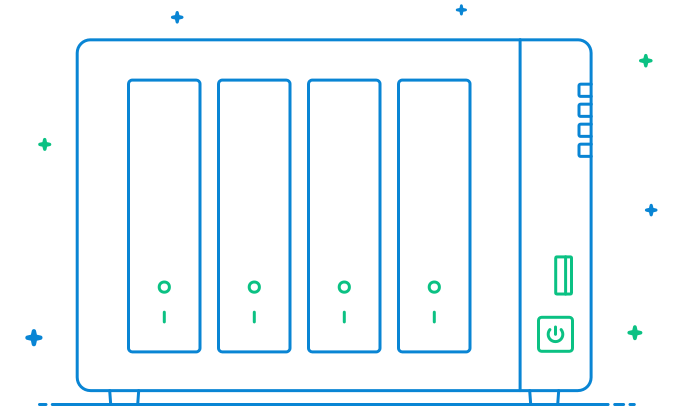
Rack Station RS408 / RS408RP has 4 HDD slots, and it supports the following array types:

  • Synology Hybrid RAID (SHR);
  • RAID 6;
  • RAID 5;
  • RAID 10;
  • RAID 1;
  • RAID 0;
  • Basic;
  • JBOD;

NAS supports:

  • Btrfs;
  • EXT4;
  • EXT3 (External Disk Only);
  • FAT32 (External Disk Only);
  • exFAT (External Disk Only);
  • NTFS (External Disk Only);
  • HFS+ (External Disk Read Only);

How to Safely Recover Data from Disk Images

This utility allows you to create a complete copy of a disk and work with the disk image instead of the physical drive. This approach helps protect your data from:

  • Overwriting during the recovery process;
  • Additional data loss caused by bad sectors;
  • User errors.

To create a disk image, follow these steps:

  1. Ensure you have enough free space to store the image. Its size will typically match the size of the original disk.

  2. In the main window, select the target disk and choose Tools - Save Disk. You can also select multiple disks if needed.

  3. When the Image Creation Wizard opens, select whether you want to save the entire disk or only a specific region. Adjust the settings and click Next.
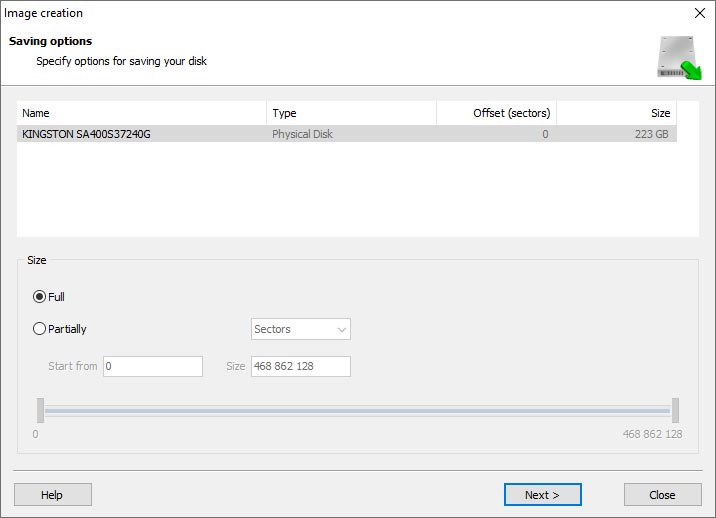
    Hetman RAID Recovery: Image Creation Wizard
  4. Choose the directory where the image will be saved. You may select any available disk connected to your PC or upload the image via FTP.
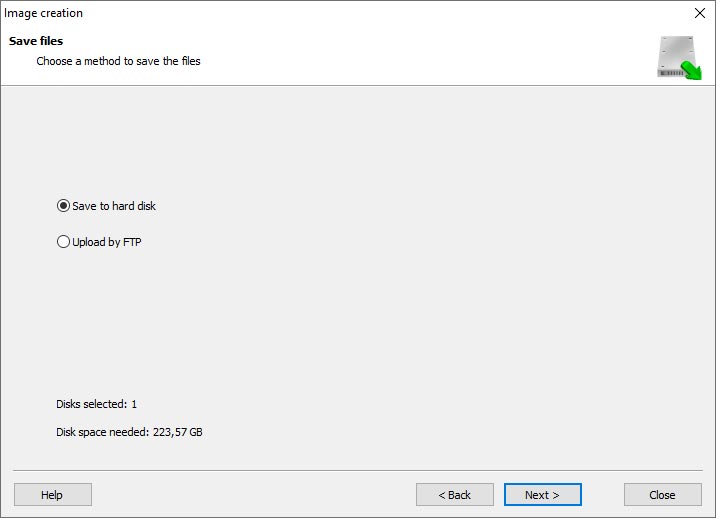
    Hetman RAID Recovery: Choose a disk or save the image via FTP

Where Are the User’s Files Actually Stored?

The Synology Rack Station RS408 / RS408RP network-attached storage keeps DSM (DiskStation Manager) operating system files on a separate RAID 1 (mirrored) array. Usually, all NAS systems create several volumes on every hard disk, and the first of them takes up to 2 Gb of space. This is where operating system files are stored. Other volumes are united into a RAID array where user’s data is written.

RAID Recovery Software: Detailed Comparison

Product Operating system RAID controller support Supported file systems Virtual RAID controller support Data recovery from damaged RAID File preview
Hetman RAID Recovery Windows, Linux, MacOS Yes, over 100 controllers FAT, exFAT, NTFS, ReFS, APFS, HFS+, Ext4, Ext3, Ext2, ReiserFS, Btrfs, VMFS, Hikvision, XFS, UFS, ZFS Yes Yes Yes
DiskInternals RAID Recovery Windows Yes, over 10 controllers FAT, NTFS, Ext2/3/4, HFS+ No Yes Yes
R-Studio Windows, Mac, Linux Yes, over 20 controllers FAT, NTFS, Ext2/3/4, HFS+ Yes Yes Yes
UFS Explorer RAID Recovery Windows, Mac, Linux Yes, over 100 controllers FAT, NTFS, Ext2/3/4, HFS+ Yes Yes Yes
EaseUS Data Recovery Windows Yes, over 20 controllers FAT, NTFS, Ext2/3/4, HFS+ No Yes Yes
ReclaiMe Free RAID Recovery Windows Yes, over 100 controllers FAT, NTFS, Ext2/3/4, HFS+ Yes Yes Yes

Feedback

We will be happy to answer your questions!

Comments (1)

  • Hetman Software: Data Recovery
    Hetman Software: Data Recovery 9.08.2022 12:31 #
    If you want to ask a question about data recovery, from NAS Rack Station RS408 / RS408RP, feel free to leave a comment!
Post comment
User
Your email address will not be published. Required fields are marked *

Vladimir Artiukh

Author: Vladimir Artiukh, Technical Writer

Vladimir Artiukh is a technical writer for Hetman Software, as well as the voice and face of their English-speaking YouTube channel, Hetman Software: Data Recovery for Windows. He handles tutorials, how-tos, and detailed reviews on how the company’s tools work with all kinds of data storage devices.

Oleg Afonin

Editor: Oleg Afonin, Technical Writer

Oleg Afonin is an expert in mobile forensics, data recovery and computer systems. He often attends large data security conferences, and writes several blogs for such resources as xaker.ru, Elcomsoft and Habr. In addition to his online activities, Oleg’s articles are also published in professional magazines. Also, Oleg Afonin is the co-author of a well-known book, Mobile Forensics - Advanced Investigative Strategies.

Share

Questions and answers

  • What is iSCSI and how does it work in a network storage environment?

    iSCSI (Internet Small Computer System Interface) is a protocol that allows the transmission of SCSI commands over IP networks. It enables the remote connection of storage devices over a network, offering a cost-effective alternative to Fibre Channel for building storage area networks (SANs).

    In a network storage environment, iSCSI works by encapsulating SCSI commands within IP packets, allowing the transmission of these commands over Ethernet or TCP/IP networks. The iSCSI protocol allows a server to connect to remote storage devices as if they were directly attached to the server.

    Here's a step-by-step breakdown of how iSCSI works in a network storage environment:

    1. Initiator: The server or client that initiates the connection to the storage device is called the initiator. It sends iSCSI commands to the target.
    2. Target: The storage device that responds to the initiator's requests is called the target. It receives the iSCSI commands, processes them, and returns the appropriate responses.
    3. Discovery: The initiator needs to discover the available targets on the network. It sends a discovery request to a specific IP address or a range of IP addresses. The target responds with its existence and available storage resources.
    4. Login: Once the initiator has discovered the targets, it establishes a connection by logging in to a specific target. This involves authentication and negotiation of parameters such as security, access control, and session settings.
    5. Command and Data Transfer: After successful login, the initiator can now send SCSI commands to the target. These commands include read, write, and other storage operations. The iSCSI protocol encapsulates the SCSI commands into IP packets and transmits them over the network.
    6. Response: The target receives the SCSI commands, processes them, and returns the appropriate responses to the initiator. These responses include status information, data, or error messages.
    7. Logout: When the initiator no longer needs access to the target, it initiates a logout process to terminate the connection. This involves releasing resources and terminating the session.

    Overall, iSCSI provides a flexible and scalable solution for network storage, allowing organizations to leverage existing IP networks for storage connectivity. It enables the consolidation of storage resources, simplifies management, and provides remote access to storage devices.

  • Can you explain the benefits and advantages of using iSCSI technology in a NAS system?

    iSCSI (Internet Small Computer System Interface) is a protocol that enables the transmission of SCSI commands over IP networks. When used in a NAS (Network-Attached Storage) system, iSCSI offers several benefits and advantages:

    1. Flexibility: iSCSI allows NAS systems to support a wide range of operating systems and platforms, including Windows, Linux, and macOS. This flexibility makes it easier to integrate a NAS system into existing IT infrastructure.
    2. Performance: iSCSI leverages the high-speed and low-latency nature of IP networks, enabling faster data transfer rates and reduced access times compared to traditional NAS protocols like NFS or SMB. This is particularly beneficial for applications that require high-performance storage, such as databases or virtualization environments.
    3. Scalability: iSCSI allows for the creation of large storage volumes that can be easily expanded as needed. It supports features like thin provisioning, which enables the allocation of storage space on-demand rather than pre-allocating it. This helps optimize storage utilization and simplifies storage management.
    4. Block-level access: Unlike file-level access provided by protocols like NFS or SMB, iSCSI offers block-level access to storage devices. This means that applications can directly access and manipulate individual storage blocks, providing more control and flexibility over data storage and retrieval.
    5. Data protection: iSCSI supports advanced storage features like snapshots, replication, and RAID (Redundant Array of Independent Disks). These features help ensure data integrity, availability, and protection against hardware failures or disasters. Snapshots allow for point-in-time copies of data, replication enables data redundancy across multiple locations, and RAID provides fault tolerance.
    6. Centralized management: iSCSI simplifies storage management by consolidating storage resources into a single, manageable unit. Administrators can use iSCSI management tools to configure, monitor, and control storage devices, making it easier to manage and allocate storage resources.
    7. Cost-effective: iSCSI leverages existing IP networks, eliminating the need for dedicated storage networks. This reduces infrastructure costs by utilizing the existing network infrastructure for storage connectivity.

    Overall, iSCSI technology in a NAS system offers flexibility, performance, scalability, data protection, centralized management, and cost-effectiveness, making it a popular choice for organizations requiring efficient and reliable storage solutions.

  • Does the NAS Synology Rack Station RS408 / RS408RP support the iSCSI protocol, and if so, what are the specific features and capabilities offered by this support?

    Yes, the Synology Rack Station RS408 / RS408RP does support the iSCSI protocol. Here are the specific features and capabilities offered by this support:

    1. iSCSI Target: The RS408 / RS408RP can function as an iSCSI target, allowing you to create virtualized storage for your servers or virtual machines.
    2. Thin Provisioning: This feature enables you to allocate storage space dynamically, only using the actual capacity required by the iSCSI initiator. It helps maximize storage utilization and simplifies capacity planning.
    3. LUN Snapshot: The RS408 / RS408RP supports taking snapshots of iSCSI LUNs (Logical Unit Numbers) for point-in-time data protection. Snapshots can be scheduled and retained for a specified period, providing quick recovery options.
    4. LUN Backup and Restore: You can back up iSCSI LUNs to external storage devices or other NAS devices, ensuring data redundancy and disaster recovery. LUNs can also be restored from these backups when needed.
    5. LUN Cloning: This feature allows you to create multiple identical copies (clones) of an iSCSI LUN, which can be used for testing, development, or other purposes without impacting the original data.
    6. Advanced ACL Control: The RS408 / RS408RP provides fine-grained access control lists (ACLs) for iSCSI targets, allowing you to define permissions and restrict access at the user or initiator level.
    7. CHAP Authentication: Challenge-Handshake Authentication Protocol (CHAP) is supported for secure authentication between the iSCSI initiator and target, ensuring data integrity and preventing unauthorized access.
    8. MPIO and MCS Support: The RS408 / RS408RP supports both Multipath Input/Output (MPIO) and Multiple Connections per Session (MCS) for enhanced reliability and load balancing in iSCSI environments.

    These features and capabilities make the RS408 / RS408RP an ideal choice for organizations looking to leverage the iSCSI protocol for efficient and flexible storage provisioning and management.